
Summary
Chery is now the runner-up in China's megawatt charging race, with a 10%-97% charge taking 6 minutes and 50 seconds. The post Chery challenges BYD, Geely, Huawei with 1.44MW charger, promises 500km in 5 minutes appeared first on CarNewsChina.com .
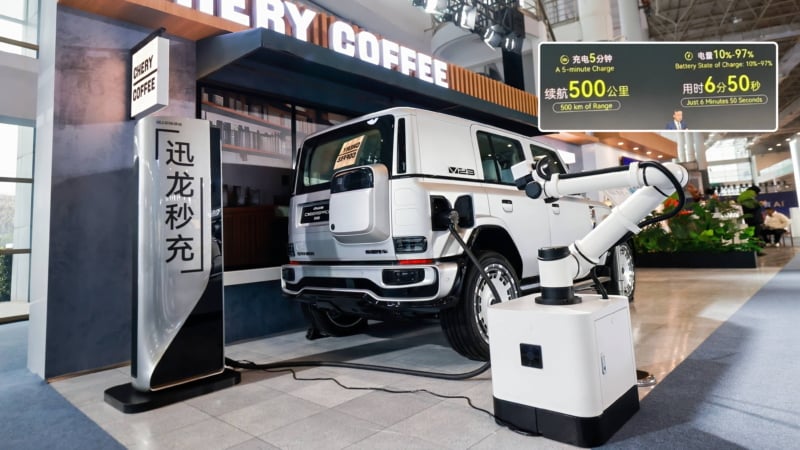
Chery has announced the “Volt-dragon” charger system, its answer to the megawatt charging networks BYD, Geely, and Huawei are building. The system provides a peak charging power of 1.44MW, and the automaker promises that users can gain 500 km of driving range in 5 minutes.
The firm also says a 10%-97% charge session will take only 6 minutes and 50 seconds, making it the new runner-up in China’s megawatt charging race.
Another charging network powered by “AI”
The Anhui-based automaker announced the Volt-dragon system at its in-house Global Innovation Conference, alongside its very own large language model (LLM), CheryMind. Chery says it’s “a brain that knows Physic (sic) world”, and it will power robotaxis, L4 assisted-driving systems, and Volt-dragon.

However, Chery hasn’t disclosed how CheryMind works with the charging network. In contrast, Geely says its Xingrui PowerMind energy LLM predicts thermal behaviour during charging. It predicts changes in cell temperature 30 seconds in advance, and dynamically adjusts the maximum allowed charging power.
The new runner-up
While Chery is vague about how AI boosts charging speed, its claims about the Volt-dragon system make it the current runner-up in the charging race. CATL’s third-gen Shenxing battery, which supports a 10%-98% charge in 6 minutes and 27 seconds, remains the charging king.
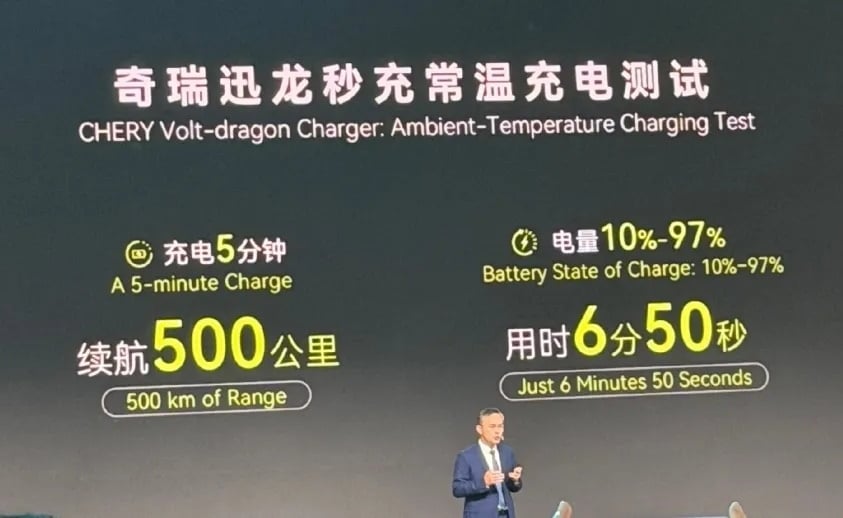
The remaining players, including BYD, Huawei, and Geely, all boast 10%- 97/98 % charging times of 8 to 9 minutes. Chery remains tight-lipped on other charging metrics and hasn’t published how its system fares in extreme heat or cold.
Compiled by CarNewsChina.
Chery promises users will gain 500km in 5 minutes of charging, though it hasn’t announced which vehicles or models this metric applies to. The Volt-dragon system’s peak charging power is 1.44 MW, and supported vehicles are expected to be built on 800V or even 1000V-plus platforms.
Stations and roll-out plans
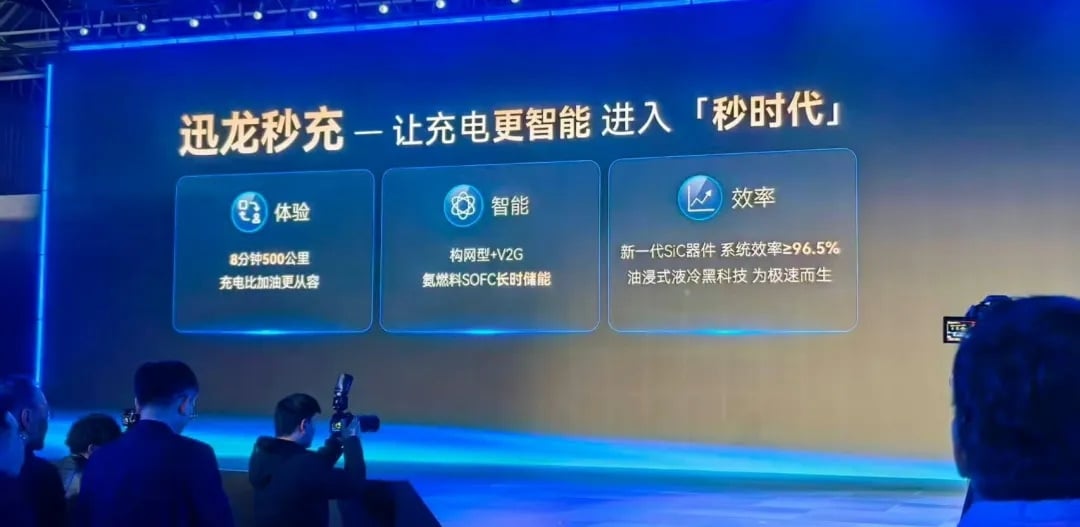
The automaker says Volt-dragon chargers will use its latest-gen silicon carbide power electronics, with an overall grid-to-plug system efficiency of 96.5%. The stations will also use immersion liquid cooling to dissipate heat during megawatt charging.
The charging cables have also been optimised for lighter weight, with the plug-and-cable combo weighing 2kg. Chery also says the stations will never exceed 50 dBA during operation, equivalent to a normal conversation.
Chery is also promising big things for Volt-dragon, including automated charging via robotic arms for a “drive-thru” experience. It also says the system supports Vehicle-to-grid (V2G) tech, and NEVs will be able to export electricity to the grid for profit.
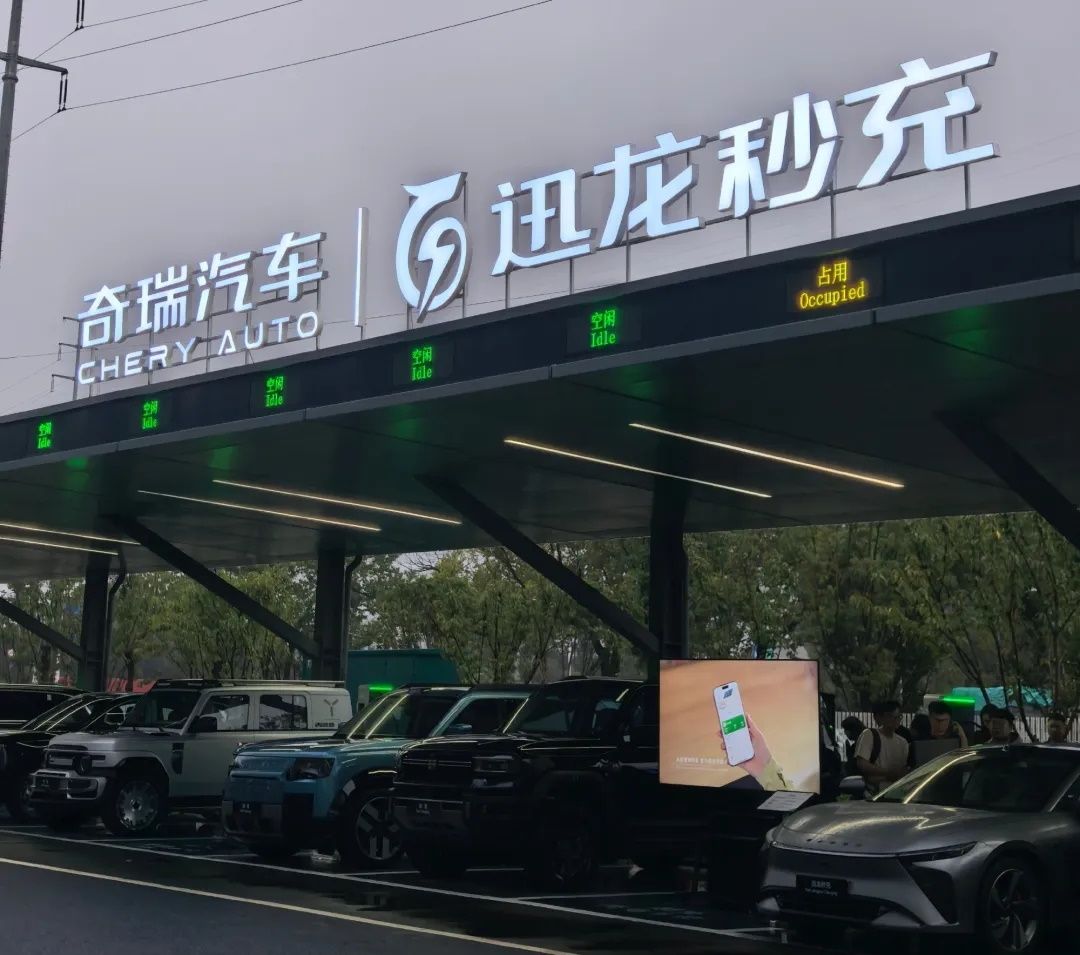
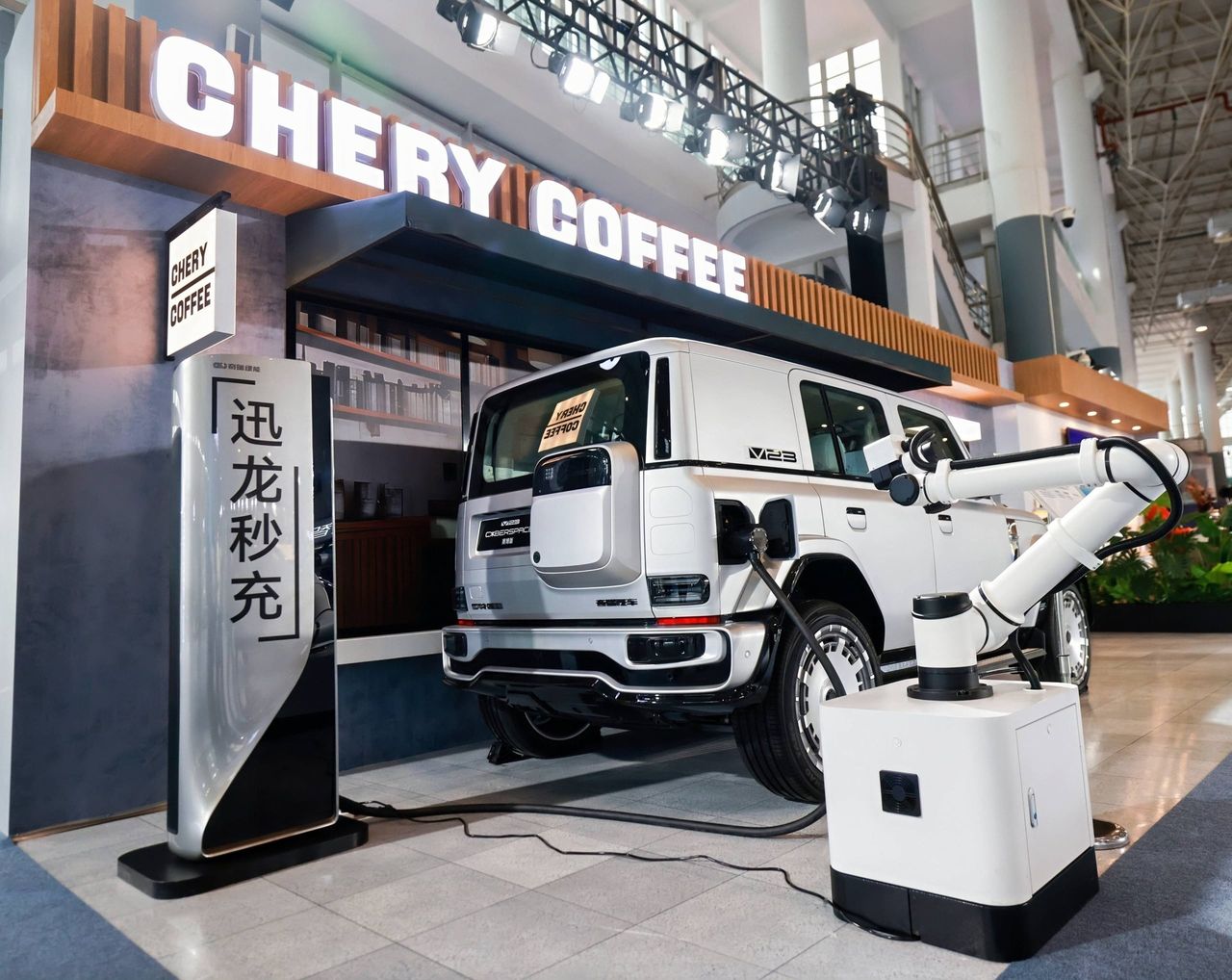
Of course, a megawatt, or even a gigawatt, charger would be useless if there are no stations to plug cars in. Chery says it is opening 100 Volt-dragon stations in 10 cities across China, with further expansion plans to be announced before the end of 2026.
The end goal is to have more than 20,000 Volt-dragon V2G-capable stations worldwide by 2029. By comparison, BYD hit 10,000 Flash Charging stations in late August this year and aims to reach 20,000 before the end of 2026.
Source: Sina Finance, Xia Liao Che


