
Summary
Driving 10,000 miles a year in a mainstream electric crossover charged at home on the US national average residential electricity rate of $0.18 per…
Driving 10,000 miles a year in a mainstream electric crossover charged at home on the US national average residential electricity rate of $0.18 per kilowatt-hour costs roughly $565 in electricity, compared with $1,250 for a 30-MPG gasoline car burning regular unleaded at $3.75 a gallon. That $685 annual savings widens to nearly $900 if you plug in overnight on an $0.10/kWh utility time-of-use plan, but it shrinks to less than $150 if you rely exclusively on $0.48/kWh public DC fast chargers or live in a high-tariff utility territory without an off-peak EV rate.
Three variables govern the exact gap: the utility rate printed on your electric bill, the 10% to 12% energy loss between your garage wall outlet and the battery pack, and the share of your annual mileage spent at highway fast chargers.
Many prospective buyers calculate EV running costs by multiplying a vehicle's advertised battery capacity by a headline electricity rate, only to see higher monthly utility bills once they start commuting. Others assume public charging costs roughly the same as plugging in at home. Putting residential Level 2 charging, commercial fast-charging networks, and local gas pump prices on an identical 10,000-mile baseline reveals where electric vehicles save money and where the fuel advantage disappears.
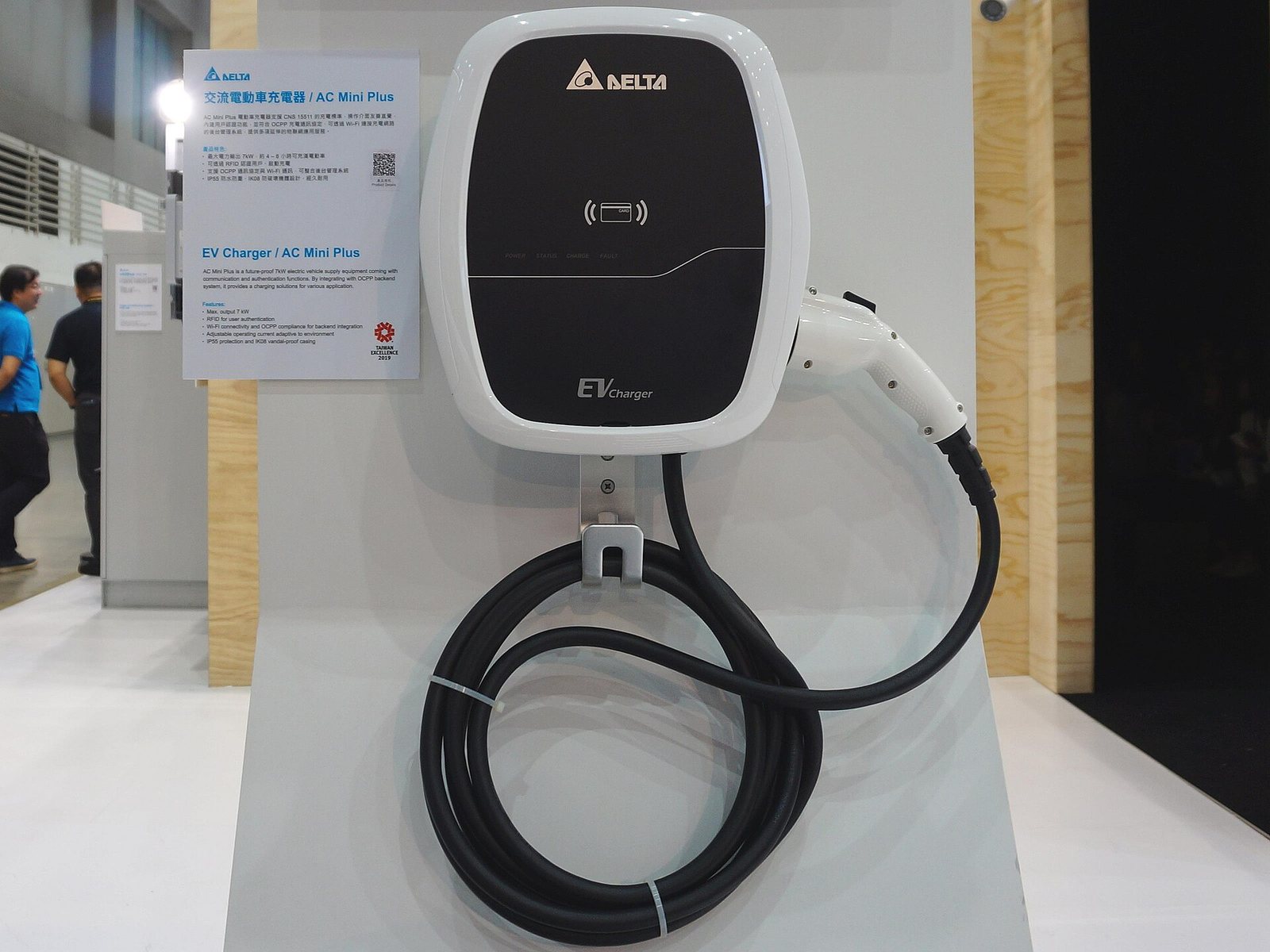
The 10,000-Mile Baseline and Wall-to-Battery Charging Loss
Comparing electric and gasoline fuel bills over 10,000 miles requires matching two vehicles of similar size and accounting for the electricity lost as heat during charging.
Take a typical compact electric SUV or sedan such as a Tesla Model Y Long Range, Hyundai Ioniq 5, or Chevrolet Equinox EV, which averages an EPA-rated 28 kWh per 100 miles (about 3.57 miles per kWh) in mixed city and highway driving. That 28 kWh figure measures energy leaving the battery pack to turn the motors, not the electricity pulled from your utility meter.
When you plug into a 240-volt Level 2 home charger, the car's onboard charger converts alternating current (AC) from the house into direct current (DC) for the battery while running cooling pumps and control modules. Independent testing by the EPA and automotive engineers shows this AC-to-DC conversion loses roughly 10% to 12% of the energy drawn from the wall.
Including a standard 12% charging loss, an EV rated at 28 kWh/100 miles actually pulls 31.4 kWh from your home meter for every 100 miles driven, or 3,140 kWh over 10,000 miles.
On the gasoline side, a comparable compact SUV or midsize sedan such as a Toyota RAV4, Honda CR-V, or Honda Accord non-hybrid averages around 30 miles per gallon in combined driving. Covering 10,000 miles consumes 333.3 gallons of regular gasoline. At a national baseline pump price of $3.75 per gallon, the annual gasoline bill comes to $1,250, or 12.5 cents per mile.
Applying the US Energy Information Administration (EIA) residential average rate of $0.183/kWh to 3,140 kWh of metered electricity yields an annual home charging bill of $575, or 5.75 cents per mile. If your electric utility offers a dedicated off-peak EV time-of-use (TOU) tariff around $0.10/kWh between midnight and 6:00 AM, that same 10,000 miles drops to $314 a year (3.1 cents per mile), saving $936 compared with the 30-MPG gas car.
| Charging or Fuel Scenario | Rated Efficiency | Metered Usage per 10,000 Mi | Unit Energy Price | Cost per Mile | Annual Cost (10,000 Mi) | Annual Savings vs 30-MPG Gas |
|---|---|---|---|---|---|---|
| Home Level 2 (Off-Peak TOU Rate) | 28 kWh/100 mi | 3,140 kWh (incl. 12% loss) | $0.10 / kWh | $0.031 | $314 | Saves $936 |
| Home Level 2 (US Avg Residential) | 28 kWh/100 mi | 3,140 kWh (incl. 12% loss) | $0.183 / kWh | $0.057 | $575 | Saves $675 |
| Mixed (80% Home Avg + 20% DC Fast) | 28 kWh/100 mi | 3,108 kWh blended | $0.183 / $0.45 kWh | $0.073 | $731 | Saves $519 |
| High-Rate State Home (CA/New England) | 28 kWh/100 mi | 3,140 kWh (incl. 12% loss) | $0.34 / kWh | $0.107 | $1,068 | Saves $182 |
| 100% Public DC Fast Charging | 28 kWh/100 mi | 2,968 kWh (incl. 6% loss) | $0.48 / kWh | $0.142 | $1,425 | Costs $175 more |
| 30-MPG Gasoline Car (US Baseline) | 30 MPG | 333.3 gallons | $3.75 / gal | $0.125 | $1,250 | Baseline |
| 45-MPG Hybrid Car (US Baseline) | 45 MPG | 222.2 gallons | $3.75 / gal | $0.083 | $833 | Saves $417 |
The table includes a 45-MPG conventional hybrid (such as a Toyota Prius or Camry Hybrid) because many shoppers cross-shop hybrids against EVs. At $3.75/gallon, a 45-MPG hybrid spends $833 per 10,000 miles (8.3 cents per mile), beating an EV charged on high-tier residential electricity or frequent public fast chargers.
How State Utility Gaps and Public Fast Chargers Shift the Math
National averages hide dramatic regional swings in both electricity and gasoline prices across the United States.
In states with abundant hydro or low-cost generation such as Washington, Idaho, Oregon, and Louisiana, standard residential electricity rates sit between $0.11 and $0.13/kWh. Even without a special time-of-use meter, drivers in those states pay roughly $360 to $410 per 10,000 miles at home.
By contrast, in California (under PG&E, SCE, or SDG&E), Hawaii, and parts of Massachusetts and Connecticut, standard residential electricity tiers routinely reach $0.32 to $0.45/kWh. At $0.34/kWh, home charging costs $1,068 per 10,000 miles.
California drivers still save money against local gasoline because California regular unleaded typically trades around $4.70 to $5.10 per gallon ($1,566 to $1,700 for 10,000 miles at 30 MPG), but in New England, where electricity exceeds $0.30/kWh while regular gas sits near $3.50/gallon, an EV charged on a flat residential rate costs nearly the same per mile as a gas sedan.
Public DC fast charging changes the equation even more sharply. Commercial networks including Tesla Superchargers, Electrify America, and EVgo pay commercial utility demand charges and recoup hardware investments by pricing electricity between $0.38 and $0.58/kWh.
Although DC fast charging bypasses the vehicle's onboard AC converter and trims charging losses to roughly 5% to 6% (unless extreme cold requires heavy battery heating), a $0.48/kWh session still costs 14.2 cents per mile. Over 10,000 miles, relying 100% on $0.48/kWh public fast chargers results in a $1,425 annual bill, which is $175 more expensive than fueling a 30-MPG car at $3.75/gallon and nearly $600 more than running a 45-MPG hybrid.
For the typical homeowner who does 80% of their charging in the garage ($0.183/kWh) and 20% at highway Superchargers ($0.45/kWh) during summer road trips, the blended annual bill lands near $731 (7.3 cents per mile). That realistic 80/20 split preserves more than $500 in annual fuel savings over a conventional 30-MPG vehicle.
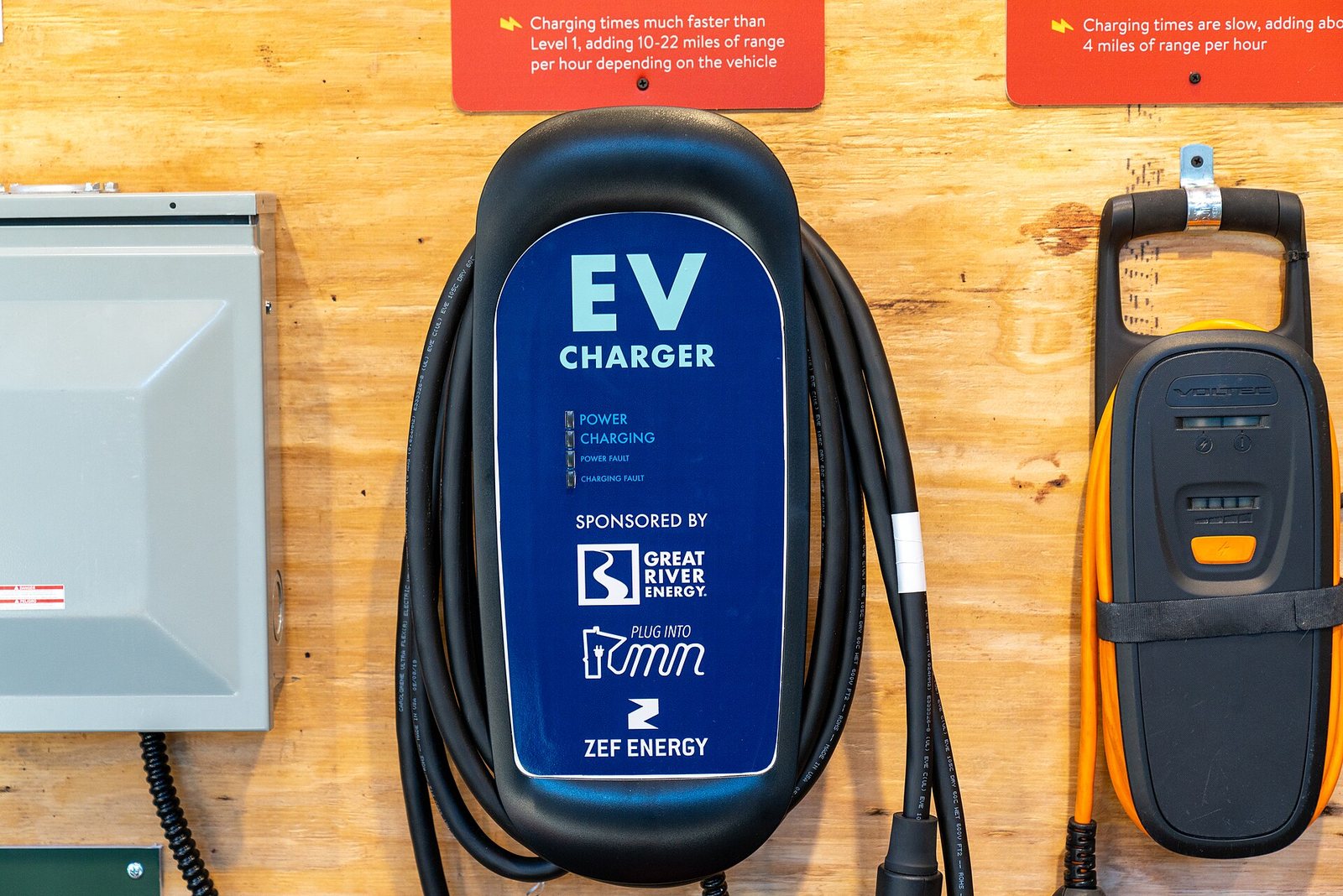
Separating Fuel Bills From Charger Installation and Ownership Costs
An honest fuel comparison stops at the utility meter and the gas pump, keeping upfront hardware and non-fuel ownership expenses in separate columns so you can calculate a realistic payback period.
Installing a residential 240-volt Level 2 charger requires purchasing the wall unit ($400 to $650 for UL-listed models from ChargePoint, Emporia, Wallbox, or Tesla) plus hiring a licensed electrician to run a dedicated 50-amp or 60-amp circuit. If your main breaker panel is in the garage with open slots, installation labor and materials typically run $500 to $900, putting total upfront hardware and wiring costs around $1,000 to $1,500 before any federal 30C tax credit or local utility rebate.
If you save $675 a year in fuel over 10,000 miles, a $1,200 home charger installation pays for itself in less than two years. However, if your home requires a 200-amp service panel upgrade costing $3,000 to $4,500 and you only drive 6,000 miles a year, fuel savings alone will take seven to ten years to recoup the electrical work.
Insurance and routine maintenance also move in opposite directions outside the fuel ledger. Because EVs skip oil changes, spark plugs, and transmission fluid services, they save roughly $150 to $250 per 10,000 miles in scheduled shop visits, though heavier curb weights can accelerate tire wear if drivers use high torque frequently.
Conversely, US auto insurance premiums for electric vehicles average $200 to $400 more per year than comparable gas models due to higher collision repair costs around battery enclosures and sensor arrays. In most states, lower scheduled maintenance and slightly higher insurance premiums roughly cancel each other out over a 10,000-mile year, leaving the home-charging fuel delta as the primary day-to-day operational savings.
Because utility tariffs, winter efficiency drops, and local gas prices vary by zip code, you can run your exact numbers in the Cardailys EV vs Gas Cost Calculator (https://cardailys.com/en/tools/ev-cost-calculator). Entering your annual mileage, your electric bill's off-peak kWh rate, your vehicle's kWh/100-mile rating, and local pump prices will generate side-by-side per-mile, monthly, annual, and five-year fuel totals.
Sources
- Cardailys · EV vs Gas Energy Cost Calculator
- Cardailys · EV Charging Compatibility Checker
- NeoCharge · How Much Does It Cost to Charge an EV at Home? (2026, by State)
- CostAnswer · EV vs Gas Cost Calculator: Energy Cost Per Mile
- US Energy Information Administration (EIA) Electric Power Monthly & Weekly Retail Gasoline and Diesel Prices (checked October 2026)