
Summary
Once touted as a possible “Norway of the Pacific,” New Zealand’s electric vehicle transition was stopped in its tracks by a change of government. The new conservative government reversed the generous tax incentives for EVs and brought in a road user charge. E…
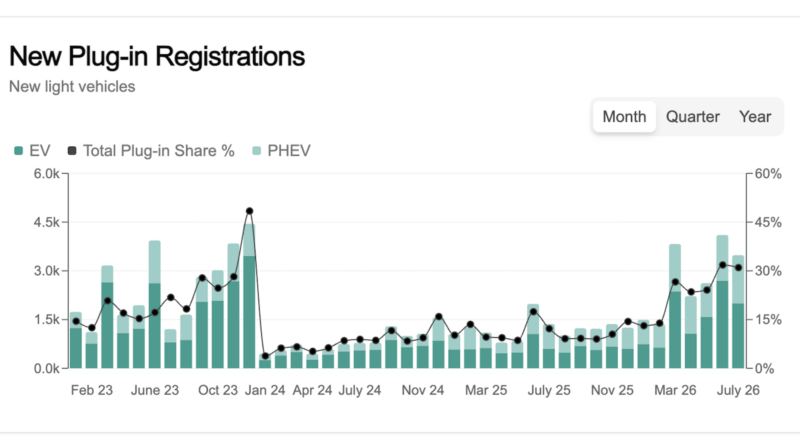
Once touted as a possible “Norway of the Pacific,” New Zealand’s electric vehicle transition was stopped in its tracks by a change of government. The new conservative government reversed the generous tax incentives for EVs and brought in a road user charge. EV sales plummeted. Sounds like another country we know. Now it appears that they are on the rise, back from the dead, breaching like a whale. In December 2023, EVs reached a market penetration of 37.7% in NZ. This dropped to 2% in January 2024 and has been in the doldrums until March of this year when it started to climb out of the crypt. Plugin vehicle penetration has been nudging 30% for the past few months.
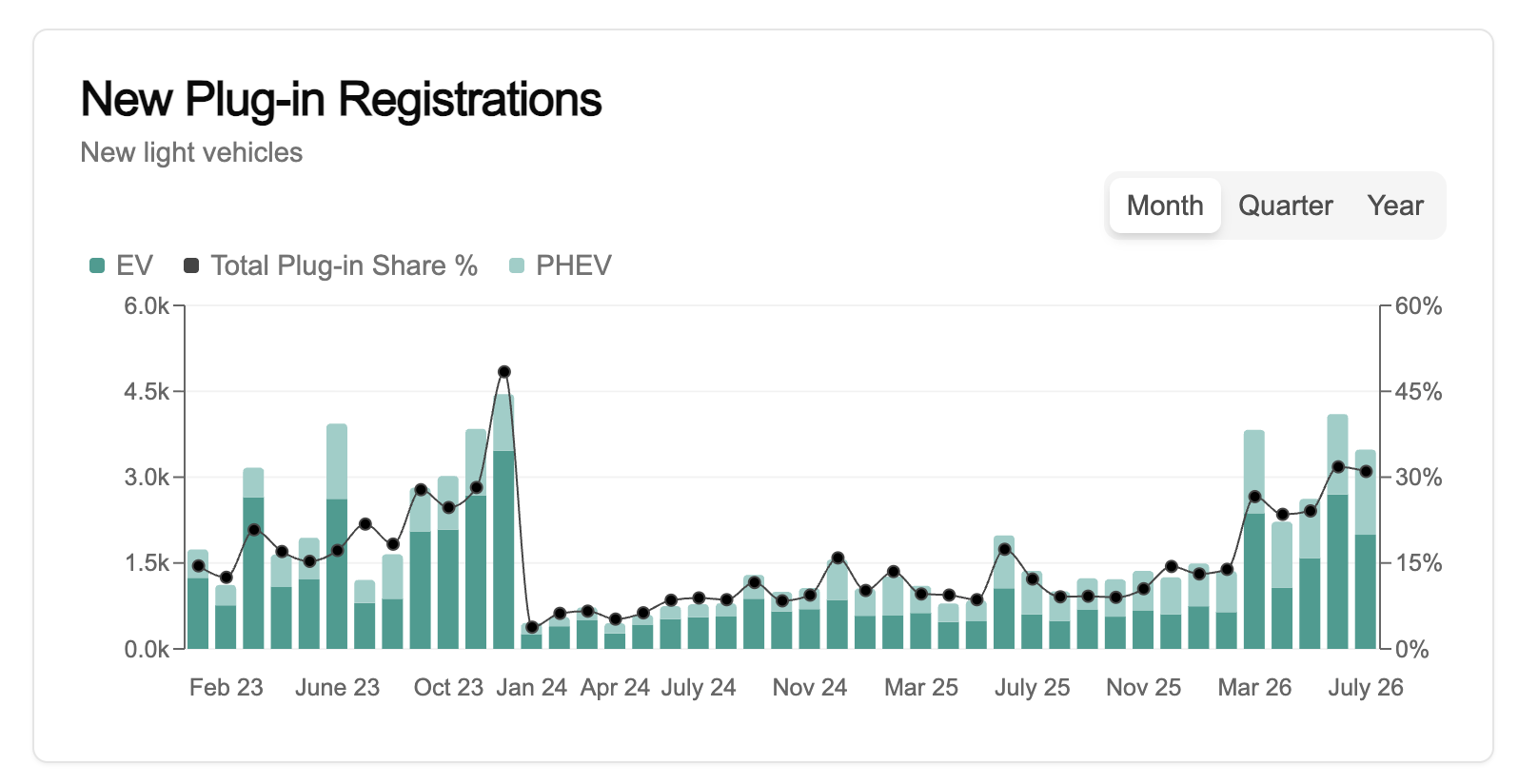
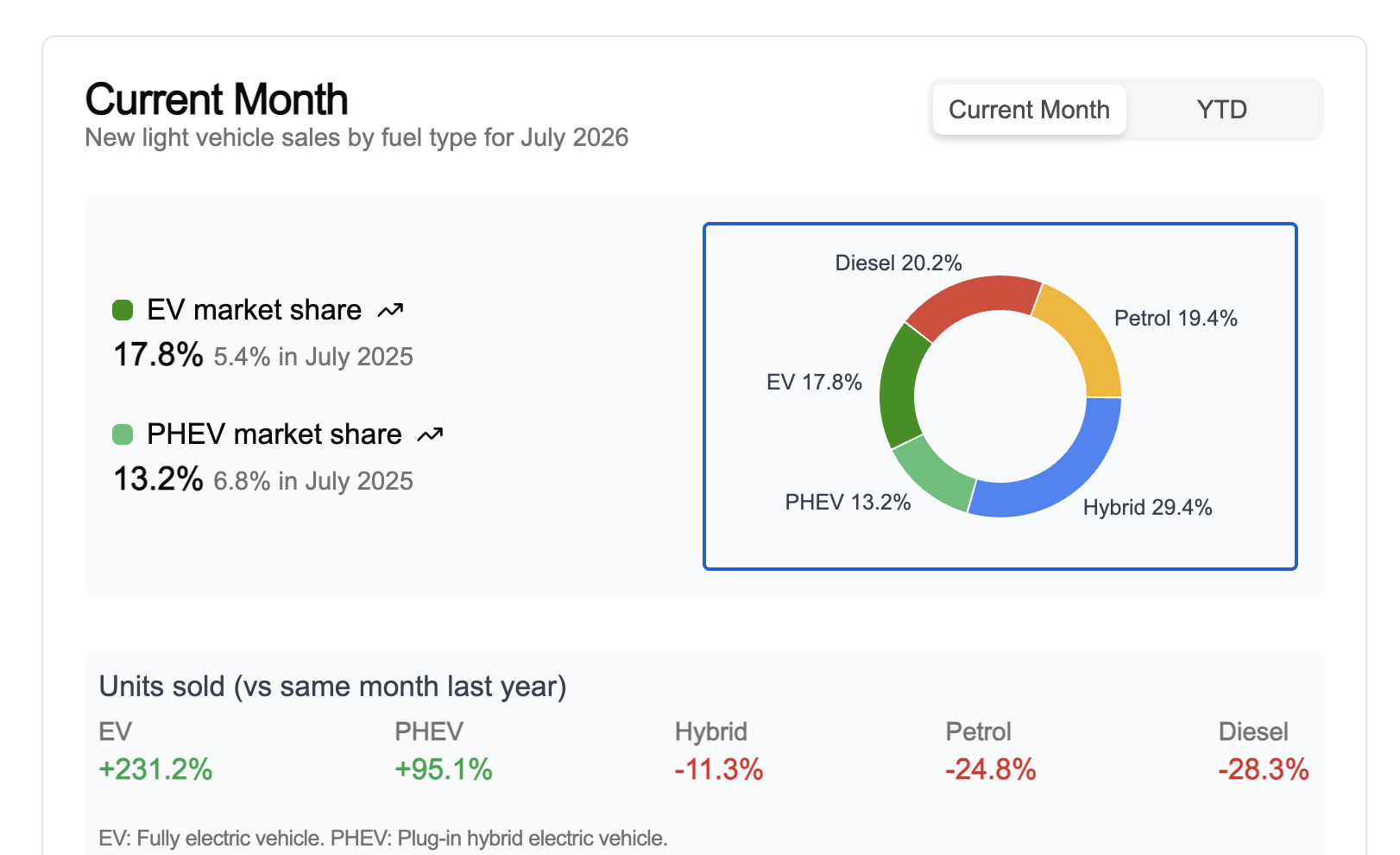
Battery electric cars have increased 231% over the same month last year, and PHEV sales have almost doubled. See some great charts here. Thanks, James. With the uncertainty of fossil fuel supplies (thank you, Donald), dealers ran out of second-hand EVs, as reported here. New plug-in car sales are up; mild hybrid, petrol, and diesel are all down. How much does that fossil fuel cost, you ask? Regular petrol (91 Octane) sells for $NZ 3.00 to $NZ 3.15 per litre. To save you looking it up, one $NZ = 58 cents US. Premium petrol (95 Octane) sells for $NZ 3.25 to $NZ 3.40 per litre. Diesel sells for $NZ2.30 to $NZ 2.55 per litre. There are 4 and half litres to a gallon. So, roughly (and I know someone will check my maths and correct me), it would cost $US 7.83 a gallon for regular.
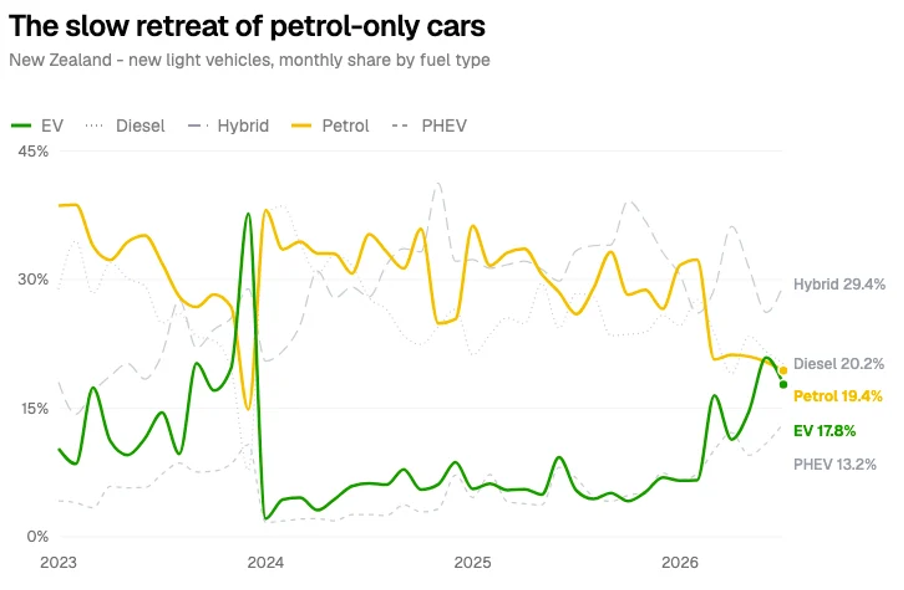
Just to add another wrinkle — fuel is cheaper in urban hubs, and more expensive in tourist and isolated areas. Roughly half of the price is fuel excise duties, emissions levies (ETS), and a flat 15% Goods and Services Tax (GST). Diesel may be cheaper, but when you add the Road User Charge (based on weight and distance driven), it ends up as about the same price.
Electricity (primarily from hydro) costs about 39–50 cents NZ per kWh. Concept Consulting estimates that: “Land transport electrification will transform energy demand in New Zealand — with the potential to replace around 190 PJ of imported liquid fuels per year with around 49 PJ of domestically produced electricity. At today’s costs, this amounts to a fuel cost saving on the order of $2.9 billion per year.” Not a bad saving.
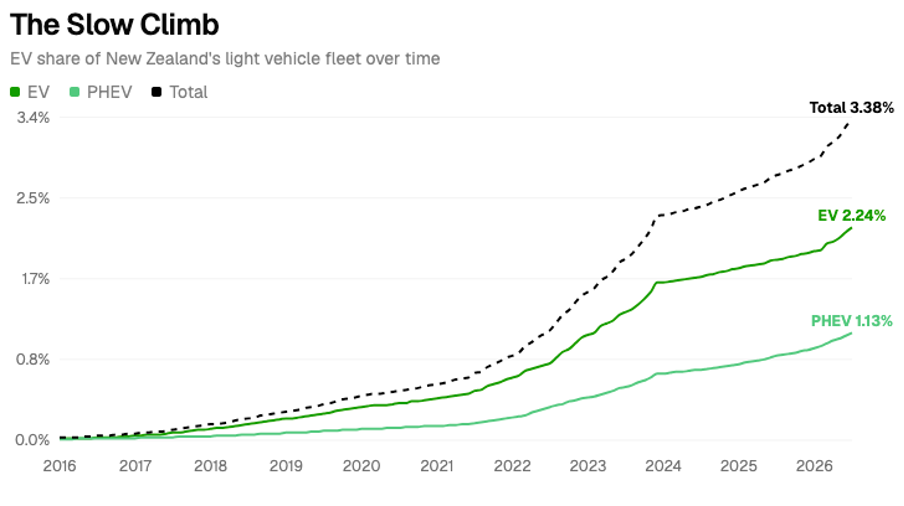
James tells me that New Zealand has reached a milestone, with 100,000 BEVs and 50,000 PHEVs now on the roads in the land of the long white cloud. He cautions that though these are big numbers, they are still a tiny percentage of the total fleet (3.38% to be precise). The electrification of any country’s fleet is a slow process, but may be even slower due to New Zealand’s idiosyncratic market supply. New Zealanders tend to keep their cars a long time. We saw this on our first visit to the country in 2008 when it seemed every yard had an old British Leyland car (Morris, Austin, etc.) in it.
Another factor is that NZ imports a large number of used cars from Japan (a market not known for its rapid uptake of electric cars). “Even if 100% of new vehicle registrations were electric from 2030, the entire light fleet would still only be 50% electric by 2040,” James predicts. Over 200 used Nissan Leafs were imported to New Zealand in July. James points out: “The used import Nissan Leaf is the second most popular EV this year. Almost one in every four EVs on the road is a Nissan Leaf. That’s why we have public chargers with CHADeMO connectors.”
July 2026 was a solid month for EV uptake. As I said earlier — nudging 30%. And here is the list of the top contenders, dominated of course by the Tesla Model Y (including the newly introduced Model L). Drum roll.
The top selling battery electric vehicles in New Zealand for July 2026 were:
- Tesla Model Y — 403
- Zeekr 7X — 151
- BYD Atto 3 — 121
- Geely EX 5 — 111
- Toyota BZ4X — 110
- Sea Lion 7 — 99
- MG 4 — 98
- Jaecoo J5 — 87
- Dongfeng Box — 84
- BYD Atto 2 — 82
- ORA 5 — 78
- BYD Atto 1 — 50
- Kia EV5 — 46
- Omoda E5 — 41
- Leapmotor C10 — 28
Like Australia’s top selling BEVs, the majority of the cars are Chinese, with one from the USA, one from Japan, and one for South Korea.
Facebook continues to be a good place to get information and share stories about life with an electric vehicle, with New Zealand owners sharing helpful tips and ideas — EV friendly tourist accommodation, etc., as a well as warning that some charging cables have been vandalised.
Māori mythology does not contain a resurrection myth, due to the failure of the demigod Maui to win immortality for mankind by conquering Hine-nui-te-pō, the Goddess of Death. Because Māui died in this attempt, mortality became permanent, and humans were destined to die and remain dead. Looks like the New Zealand EV car market might provide a contrasting paradigm. For the automobile public in NZ, the future looks like bright and electric.
CleanTechnica's Comment Policy
Share this story!
- Share on LinkedIn (Opens in new window) LinkedIn
- Share on WhatsApp (Opens in new window) WhatsApp
- Share on Facebook (Opens in new window) Facebook
- Share on Bluesky (Opens in new window) Bluesky
- Email a link to a friend (Opens in new window) Email
- Share on Reddit (Opens in new window) Reddit