
Summary
While CATL targets 2027 for sulfide batteries, Sunwoda advances customer testing of its 400 Wh/kg polymer solid-state cell built for standard battery trays. The post Solid-state battery race: Sunwoda tests polymer cells with automakers as CATL targets 2027 ap…
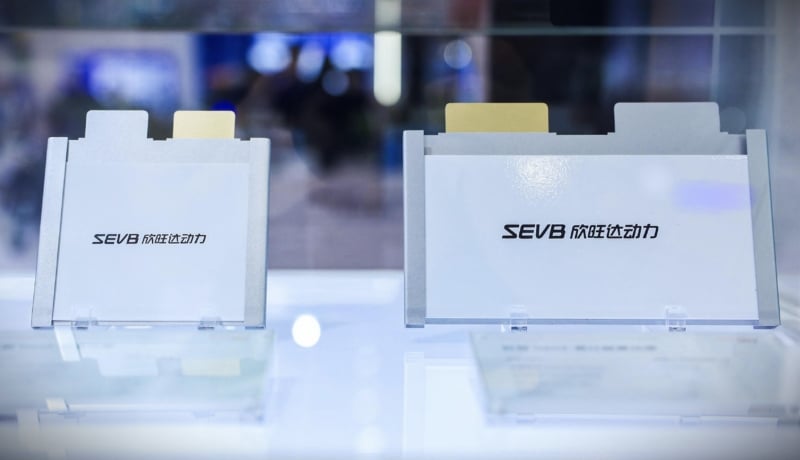
Sunwoda is advancing a polymer-composite approach to solid-state batteries as CATL pursues sulfide chemistry, with both Chinese suppliers targeting different manufacturing routes and commercial timelines. Sunwoda’s latest disclosure confirms that its battery has completed design and process verification and remains under customer evaluation, while CATL continues to target small-batch production in 2027.
Sunwoda Electric Vehicle Battery Co., Ltd. (SEVB), the automotive battery subsidiary of Sunwoda Electronic Co., Ltd. (SZSE: 300207), disclosed the update on October 30 through the Shenzhen Stock Exchange’s investor interaction platform. The company did not identify the automakers evaluating its cells or disclose sample volumes. The company had already reported customer testing in May 2026, making the latest response a development update rather than the start of a new testing programme.
CATL reaffirmed its 2027 small-batch production target in an October 27 investor response. CATL previously reported its 20 Ah solid-state prototype in 2024. While CATL is developing sulfide-based cells, Sunwoda’s Xin·Bixiao programme uses a polymer-composite electrolyte.
Polymer cells operate at pressures below 1 MPa
Sunwoda’s 20 Ah Xin·Bixiao cell has a reported energy density of 400 Wh/kg and a cycle life exceeding 1,200 cycles under external pressure below 1 MPa. Its disclosed design includes a 12-micron polymer-composite membrane and a nanoscale high-entropy silicon anode. The company has also reported passing a 200°C hot-box test.
The low-pressure requirement addresses a major solid-state battery challenge: maintaining contact between electrodes and the solid electrolyte as materials expand and contract during charging and discharging. Some sulfide-based designs require sustained external pressure to prevent interface deterioration, while sulfide materials also require moisture-controlled manufacturing because reactions with water can release toxic hydrogen sulfide (H₂S).
Sunwoda’s flexible polymer architecture is intended to accommodate electrode movement while maintaining internal contact. Operating below 1 MPa could reduce battery-pack structural requirements. However, it does not prove that additional support can be eliminated. The reported cycle life and thermal results are cell-level claims, not evidence of equivalent performance in a complete vehicle battery.
The potential packaging benefit can be illustrated by increasing a hypothetical battery from 55 kWh to 80 kWh. Assuming unchanged vehicle efficiency, a 550 km CLTC range (approximately 450 km WLTP) would rise to 800 km CLTC (approximately 660 km WLTP). This is an illustrative calculation, not a Sunwoda vehicle projection.
Pilot production and aviation applications
SEVB has connected a solid-state battery pilot line with an annual design capacity of 0.2 GWh. Its roadmap includes a second-generation sulfide battery targeted for 2027 and a future cell exceeding 500 Wh/kg targeted for 2030. These remain development targets, not confirmed commercial production dates.
Cost is another obstacle for sulfide chemistry. Shanghai Metals Market has assessed lithium phosphorus sulfur chloride (Li₆PS₅Cl), a sulfide electrolyte, at approximately 3,500 to 4,500 yuan per kilogram, compared with around 30 to 50 yuan per kilogram for conventional liquid electrolytes. The materials are not direct substitutes, but the difference illustrates the price premium associated with sulfide electrolytes.
Sunwoda is also involved in the Guangdong Engineering Research Centre for Aviation Power Batteries, which has set a target of at least 450 Wh/kg for aviation battery cells. Its eVTOL development targets also include continuous discharge power density of at least 1,000 W/kg. Aviation could offer an early specialised market for high-energy-density batteries, where performance requirements may justify higher costs, although these targets do not establish commercial orders or production volumes.
Li Auto and Xiaomi add commercial pressure
The October 30 investor exchange also raised questions about Li Auto and Xiaomi developing in-house battery packs for selected models. Sunwoda said it respected customers’ decisions and would seek to expand its business through product development and service.
Both automakers are also significant SEVB shareholders. Li Auto agreed to invest 2.65 billion yuan (approximately 395 million USD) for an initial 8.79% stake. Xiaomi subsequently proposed a 1.7 billion yuan (approximately 253 million USD) investment for a 5.34% stake, subject to shareholder approval. Following the proposed transaction, Li Auto’s stake would fall to approximately 8.32%, leaving it second-largest, with Xiaomi third.
Neither company has been identified as an evaluator of the current solid-state samples. Their in-house battery programmes provide commercial context, but do not establish lost orders or a direct connection to Sunwoda’s solid-state development.
Sunwoda must now demonstrate that customer evaluation can lead to vehicle-level validation and repeatable production. Its polymer approach offers an alternative to sulfide chemistry, but manufacturing yield, cost, durability and pack integration will determine its commercial prospects.

Adrian Leung
Writer
Adrian, an Electrical and Computer Engineering graduate with a love for cars, brings expertise and enthusiasm to every test at CarNewsChina. He also enjoys audio, photography, and staying active.


