
Summary
Debates surrounding modern electrified vehicles tend to devolve into arguments over battery chemistry, peak horsepower, or fast-charging curve profiles.
Debates surrounding modern electrified vehicles tend to devolve into arguments over battery chemistry, peak horsepower, or fast-charging curve profiles. EV purists argue that combustion engines are obsolete relics, while plug-in hybrid advocates insist that dual powertrains provide the only practical solution for road trips.
Both sides miss the single variable that actually dictates daily satisfaction: whether or not you can plug in overnight at home.
Access to dedicated residential Level 2 charging is not just a minor convenience. It is the gatekeeper that determines whether a pure electric vehicle (BEV), a plug-in hybrid (PHEV), or a traditional hybrid (HEV) will deliver on its economic and functional promises.
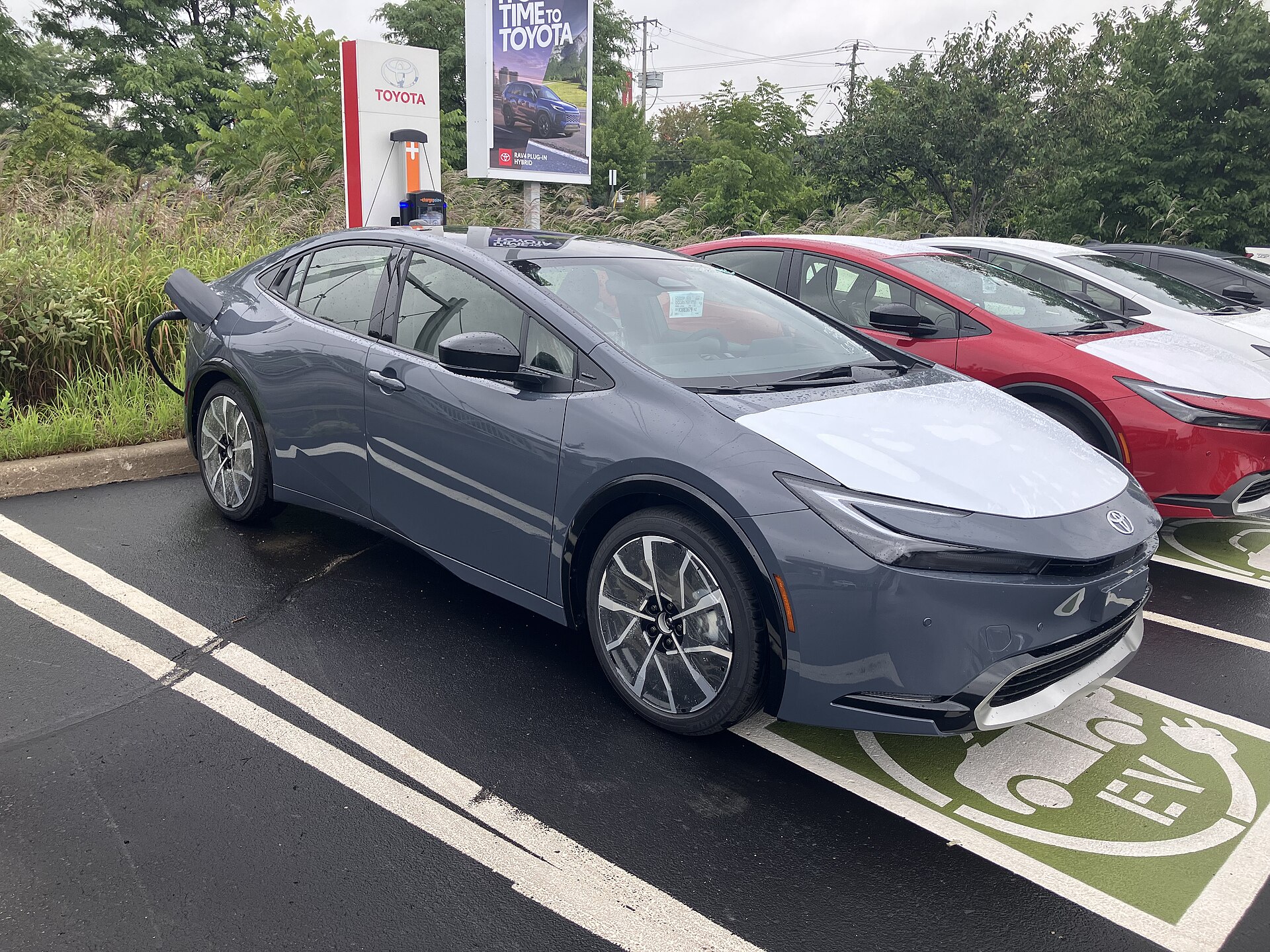
With a Home Charger: Every Option Shines
If you live in a single-family house with a garage or a dedicated carport that can support a 240V/40A circuit, you hold all the cards.
In the United States, off-peak residential electricity tariffs typically range from $0.10 to $0.16 per kilowatt-hour across most utilities. Powering an electric vehicle that consumes roughly 30 kWh per 100 miles costs between $3.00 and $4.80 for every 100 miles of driving, less than half the cost of running a 45-MPG conventional hybrid on $3.50-per-gallon gasoline.
With a Level 2 home charger plugged in while you sleep, your routine changes completely:
- A 75 kWh Pure EV (e.g., Tesla Model Y or Hyundai Ioniq 5): Daily local commuting uses 10% to 15% of the battery. You plug in every few nights, wake up with 250+ miles of range every morning, and never visit a commercial gas station or charging hub in town. For occasional long-distance interstate travel, 20-minute rest-stop fast charges handle the route smoothly.
- An 18 kWh Plug-In Hybrid (e.g., Toyota RAV4 Prime or Prius Prime): You drive on pure electric power for your daily 35-to-45-mile commute at pennies on the dollar. If you need to drive 600 miles for Thanksgiving, you never have to plan a charging stop; you fill up the 12-gallon gas tank in three minutes and keep driving.
When home charging is secured, choosing between a pure EV and a PHEV comes down to how often you take cross-country road trips versus how much you value the simpler, spacious layout of a dedicated EV skateboard platform.
Without Home Charging: Why Small-Battery PHEVs Become a Daily Chore
The real regret stories in automotive forums almost always come from buyers who purchased a PHEV while living in an apartment complex or parking on the street.
The initial calculation seems reasonable: commute on cheap electric power during the week, and rely on gasoline for road trips. But physics and logistics quickly shatter that fantasy.
A typical plug-in hybrid has an electric battery capacity between 14 kWh and 20 kWh, yielding an EPA-rated electric range of 30 to 45 miles. In cold weather or with cabin heating running, real-world range often drops to 25 miles. If your round-trip commute is 20 miles, that battery is exhausted in just over a day.
To keep driving on electric power without a home charger, you must locate a commercial public charging station every other day. Unlike pure EVs, most plug-in hybrids cannot accept 150 kW or 350 kW DC fast charging; their onboard chargers cap out at 3.3 kW or 6.6 kW on AC Level 2, taking two to four hours to charge.
Even if you find a DC-capable PHEV, commercial charging networks like Electrify America or EVgo charge $0.48 to $0.58 per kWh. Fully charging an 18 kWh pack at a commercial station costs $9 to $11 and requires sitting in an empty parking lot for 40 minutes, only to yield 30 miles of range.
Within two months, nearly every apartment-dwelling PHEV owner gives up on public charging. They drive permanently in depleted hybrid mode. At that point, the vehicle is merely dragging 400 pounds of dead battery weight and complex inverter electronics, delivering worse fuel economy than a standard non-plug-in hybrid while having cost $5,000 to $8,000 more upfront.
If you must rely entirely on commercial public infrastructure, pick one of the two logical extremes:
- Buy a long-range pure EV (65-85 kWh): Its 260-320-mile real-world buffer means you only need to fast-charge once a week. You plug into a 250 kW Supercharger while buying groceries, hit 80% charge in 22 minutes, and forget about charging for another seven days.
- Buy a standard non-plug-in hybrid (HEV): Vehicles like the standard Toyota Camry Hybrid or Honda CR-V Hybrid extract 42 to 50 MPG out of ordinary regular unleaded without requiring any cords, apps, or parking stalls.
Highway Realities and Depleted-State Fuel Economy
When comparing powertrains for highway longevity, the mechanical architecture dictates fuel consumption:
| Metric | Pure Electric (BEV) | Parallel PHEV (e.g., Toyota Prime) | Series Range Extender (REEV) |
|---|---|---|---|
| City Cost per 100 Miles (Home L2) | ~$3.50 , $4.80 | ~$3.80 , $5.20 | ~$3.80 , $5.20 |
| Public Charging Frequency | Every 7-10 days | Every 1-2 days (if electric) | Every 2-3 days (if electric) |
| Highway 75 MPH Consumption | Higher battery drain (32-38 kWh/100mi) | Direct engine drive (36-42 MPG) | Double energy conversion (30-35 MPG) |
| Passing Acceleration on Low Battery | Instant torque until low single-digits | Engine + motor combined assist | Limited if generator cannot meet peak draw |
On interstate highways at 75 to 80 mph, parallel plug-in hybrids have a clear mechanical advantage over range extenders. Because their internal combustion engines can mechanically link directly to the drive axle through planetary gears, they avoid the "gas-to-electricity-to-motion" double conversion losses that penalize pure series generators at high continuous speeds.
The Overlooked Dual-Powertrain Maintenance Overhead
Finally, prospective buyers must account for long-term maintenance reality.
A pure EV has no engine oil, no oil filter, no transmission fluid, no spark plugs, no oxygen sensors, and no exhaust system. Regular service visits are largely confined to cabin air filters, tire rotations, brake fluid checks, and wiper blades.
A plug-in hybrid or range extender contains two full propulsion systems under a single hood: a high-voltage battery and electric drive unit alongside a four-cylinder turbocharged or naturally aspirated engine. You still have to perform annual oil changes, replace engine air filters, monitor coolant loops, and pass state emissions inspections.
Furthermore, battery cycle degradation hits smaller batteries far harder. A 75 kWh battery in an EV driven 15,000 miles a year undergoes roughly 50 full charge cycles annually.
An 18 kWh PHEV battery driven the same distance on daily electric power undergoes nearly 350 full cycles a year. Over a five-year ownership period, that small battery experiences intense cycling stress, making strict adherence to manufacturer warranty conditions, such as avoiding high ambient heat exposure and keeping software up to date, vital for maintaining range.
Bottom Line: How to Choose in 2026
Strip away the marketing slogans and match your purchase to your parking situation:
- You have a garage or driveway with 240V charging: If you routinely make 500-mile road trips where you refuse to stop for more than five minutes, get an advanced PHEV. If 90% of your driving is local and you are comfortable taking 20-minute coffee breaks on road trips, buy a pure EV for the lowest operating costs and least maintenance.
- You street-park or live in an apartment without chargers: Avoid plug-in hybrids entirely. Buy a high-efficiency standard hybrid for effortless 45+ MPG, or get a long-range EV only if high-speed DC fast charging is integrated into your weekly grocery routine.