
Summary
When evaluating the refreshed 2026 Tesla Model Y crossover lineup across its three core market trims, the base Rear-Wheel Drive model, the dual-motor Long…
When evaluating the refreshed 2026 Tesla Model Y crossover lineup across its three core market trims, the base Rear-Wheel Drive model, the dual-motor Long Range All-Wheel Drive, and the flagship Performance, the deciding factor is never the marketing buzzwords printed on the window sticker. Instead, your choice hinges upon your regional winter climate, your daily charging infrastructure, and whether you genuinely require specialized performance hardware for family transportation.
Prospective buyers browsing online inventory often feel drawn toward premium badges, assuming that spending an extra $4,000 to $9,500 is essential to unlock a viable electric vehicle experience. In everyday family driving, the updated base model delivers the vast majority of the refreshed crossover experience.
Regardless of whether you purchase the entry model starting around $44,990 or step up to the dual-motor configurations priced near $48,990 and $54,490, every 2026 Model Y comes standard with the most critical generational upgrades. The entire lineup incorporates sleek front fascia revisions, standard ambient interior light piping, ventilated front seats, a rear eight-inch passenger touchscreen display, and dual-pane acoustic glass throughout the greenhouse.
Underneath the body, Tesla upgraded all models with frequency-response selective dampers, smoothing out the harsh, brittle ride quality that plagued earlier model years. This standard equipment means entry-level owners enjoy identical seating comfort, highway quietness, and software features.
Moving up the trim ladder buys functional mechanical margins tailored to severe weather and rapid transit rather than basic luxury.
Rear-Wheel Drive vs Long Range AWD on highway range, cold-weather traction, and peak Supercharger speeds
For drivers residing in the northern half of the country or those who frequently travel beyond metropolitan boundaries, the $4,000 step from Rear-Wheel Drive to Long Range All-Wheel Drive is one of the most justifiable upgrades in the modern electric crossover segment. The difference is not just seventeen additional miles on the official Monroney sticker, but a complete transformation in mechanical stability, cold-weather resilience, and fast-charging capability.
On paper, the EPA rates the base single-motor Model Y at an admirable 320 miles of range, while the Long Range AWD carries an official rating of 337 miles. In warm suburban commuting conditions where you plug into a Level 2 home charger each evening, both vehicles perform their duties without a hint of battery anxiety.
The functional divide between these battery packs emerges when temperatures plunge below freezing and road speeds climb to 70 miles per hour. Standard range variants utilize a slightly smaller battery pack that experiences sharper discharge limitations in winter weather.
When cruising at continuous highway speeds in 20°F conditions with the cabin heater running, real-world range on the base Rear-Wheel Drive trim drops to roughly 240 to 250 miles. The Long Range AWD model incorporates a larger energy reserve with superior cold-temperature discharge characteristics, allowing it to sustain 280 to 290 miles under identical winter highway conditions.
Having that additional forty miles of highway cushion frequently eliminates an entire charging stop on regional road trips.
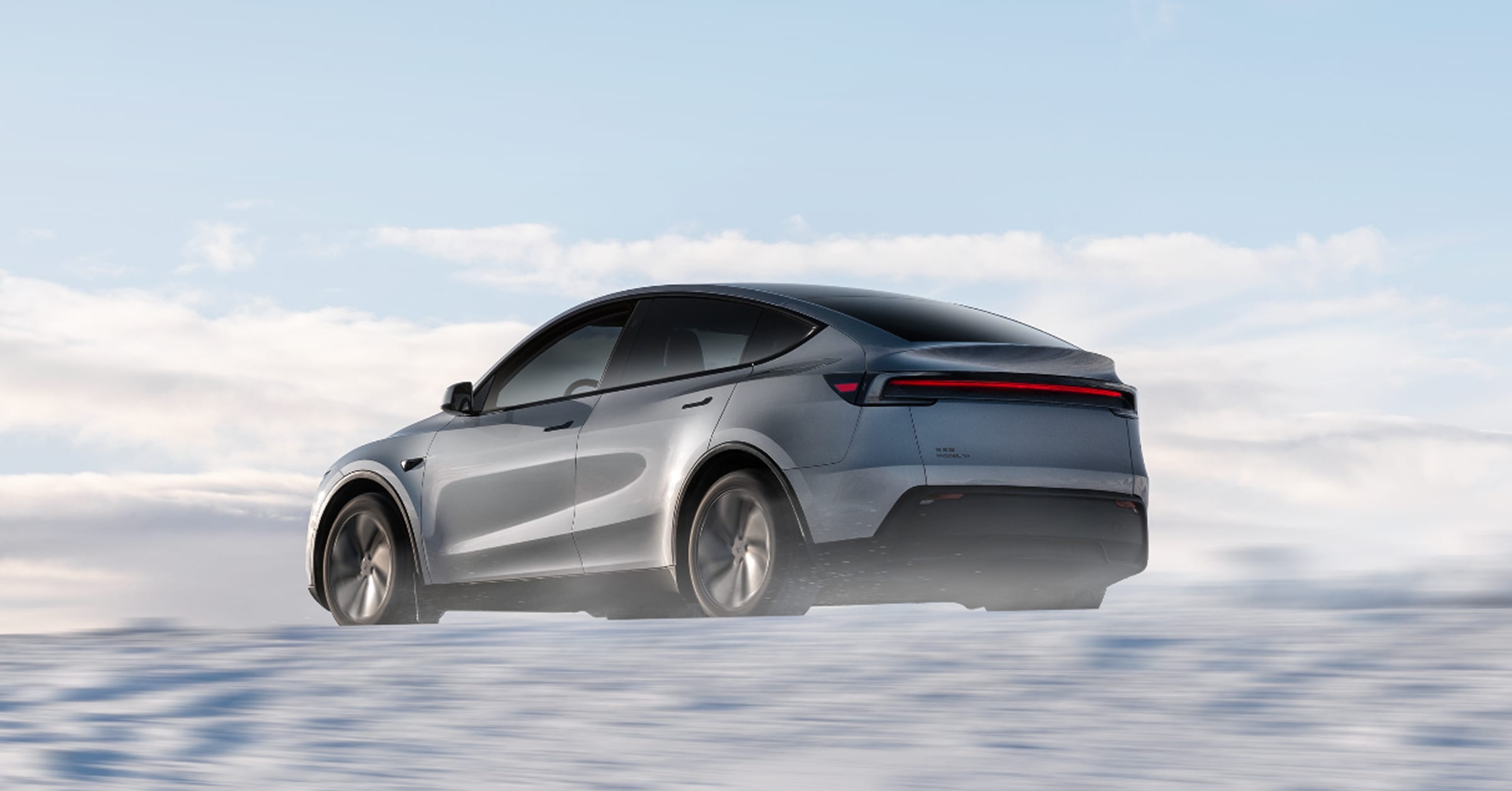
Traction management provides an even more compelling argument for northern families facing winter snowfall and icy mountain passes. The base Model Y sends all of its power through a single rear permanent magnet motor, accelerating from zero to sixty miles per hour in a respectable 6.5 seconds.
When rear tires lose grip on packed snow or slushy freeway ramps, the traction control system must cut power or pulse individual brakes to regain composure. The Long Range AWD model pairs that rear motor with an independent front induction motor, boosting combined output and dropping the zero-to-sixty sprint to 4.8 seconds.
More importantly, its dual-motor all-wheel-drive system calculates torque distribution at millisecond intervals. If the rear wheels slip, the front axle instantly pulls the vehicle forward, delivering surefooted stability across slippery roads that rear-wheel-drive crossovers cannot replicate even with winter tires.
Public fast-charging efficiency introduces another critical operational advantage for frequent travelers. When connected to Tesla V3 or V4 Superchargers, the Long Range AWD model achieves peak charging rates of up to 250 kilowatts.
Its battery chemistry permits sustained high-current intake between 10% and 50% state of charge, adding up to 175 miles of range in just fifteen minutes. The standard Rear-Wheel Drive variant peaks closer to 170 kilowatts.
While still perfectly adequate for occasional weekend jaunts, the slower charging curve requires five to ten extra minutes at each charging stall, an accumulation that becomes noticeable on cross-country road trips.
| Trim Level and Powertrain | Base Retail Price (MSRP) | EPA Estimated Range | 70 mph Winter Range (20°F) | Powertrain and 0-60 mph Time | Peak Supercharging Rate | Audio System Configuration | Factory Wheel Fitment |
|---|---|---|---|---|---|---|---|
| Model Y Rear-Wheel Drive | $44,990 | 320 miles | Approx. 245 miles | Single Rear Motor (6.5s) | 170 kW | 9 speakers, single amplifier | 19-inch Gemini wheels |
| Model Y Long Range AWD | $48,990 | 337 miles | Approx. 285 miles | Dual-Motor AWD (4.8s) | 250 kW | 15 speakers, dual amps, subwoofer | 19-inch Gemini wheels |
| Model Y Performance | $54,490 | 279 miles | Approx. 230 miles | Dual-Motor Performance (3.5s) | 250 kW | 15 speakers, dual amps, subwoofer | 21-inch Überturbine wheels |
Inside the cabin and chassis: speaker counts, subwoofers, and how wheel size changes real-world efficiency
Once you look past the battery pack and dual electric motors, stepping up the Model Y ladder introduces subtle but meaningful alterations inside the cabin, alongside an option sheet trap that catches many first-time buyers. While all trims share the same minimalist dashboard and ventilated synthetic leather seats, your acoustic environment varies dramatically depending on the badge on the rear tailgate.
The base Rear-Wheel Drive model comes equipped with a nine-speaker audio package driven by a single amplifier, and it omits a dedicated low-frequency driver entirely. For podcasts, talk radio, and casual background music, this setup provides clear mids and crisp dialogue.
Stepping into the Long Range AWD or Performance trim unlocks Tesla's premium audio system, transforming the vehicle into an exceptional acoustic listening space. This configuration integrates fifteen individually tuned speakers, dual high-output amplifiers, and an enclosed subwoofer mounted inside the rear quarter panel.
When streaming high-bitrate music tracks or dynamic orchestral scores, the premium system delivers rich, punchy bass extension and a broad stereo image that completely fills the cabin. For audiophiles or drivers who spend hours listening to music on daily commutes, the speaker upgrade represents a tangible daily luxury that makes the $4,000 price step feel immediately rewarding.
While audio represents a clear upgrade, factory wheel selection stands as the single biggest factor undermining real-world highway range. The standard 19-inch wheels fitted with aerodynamic covers provide optimal rolling resistance and maximum tire sidewall cushioning.
Upgrading to optional 20-inch wheels or accepting the mandatory 21-inch Überturbine wheels on the Performance trim introduces a severe efficiency penalty. Real-world range evaluations reveal that stepping from 19-inch wheels to 21-inch wheels reduces continuous highway efficiency by 10% to 14%, lopping nearly thirty to forty miles off your highway travel range.
The sticky, wide summer rubber and open spoke design create substantial aerodynamic drag and friction.
The mechanical trade-off of large-diameter wheels also directly undermines passenger ride comfort. The ultra-low-profile tires mounted on 21-inch rims leave very little rubber between the pavement and the alloy rim.
When traversing potholed urban streets, recessed manhole covers, or expansion joints, the thin tire sidewalls cannot compress sufficiently to absorb sharp impacts. Even with the upgraded adaptive dampers, a Model Y rolling on 21-inch wheels transmits jarring vertical impacts into the cabin seats.
Furthermore, replacement 21-inch staggered tires cost significantly more than standard 19-inch all-season rubber, adding notable recurring maintenance expenses over three years of ownership.
Who should step up to Performance or three-row seating and who should pocket the price difference
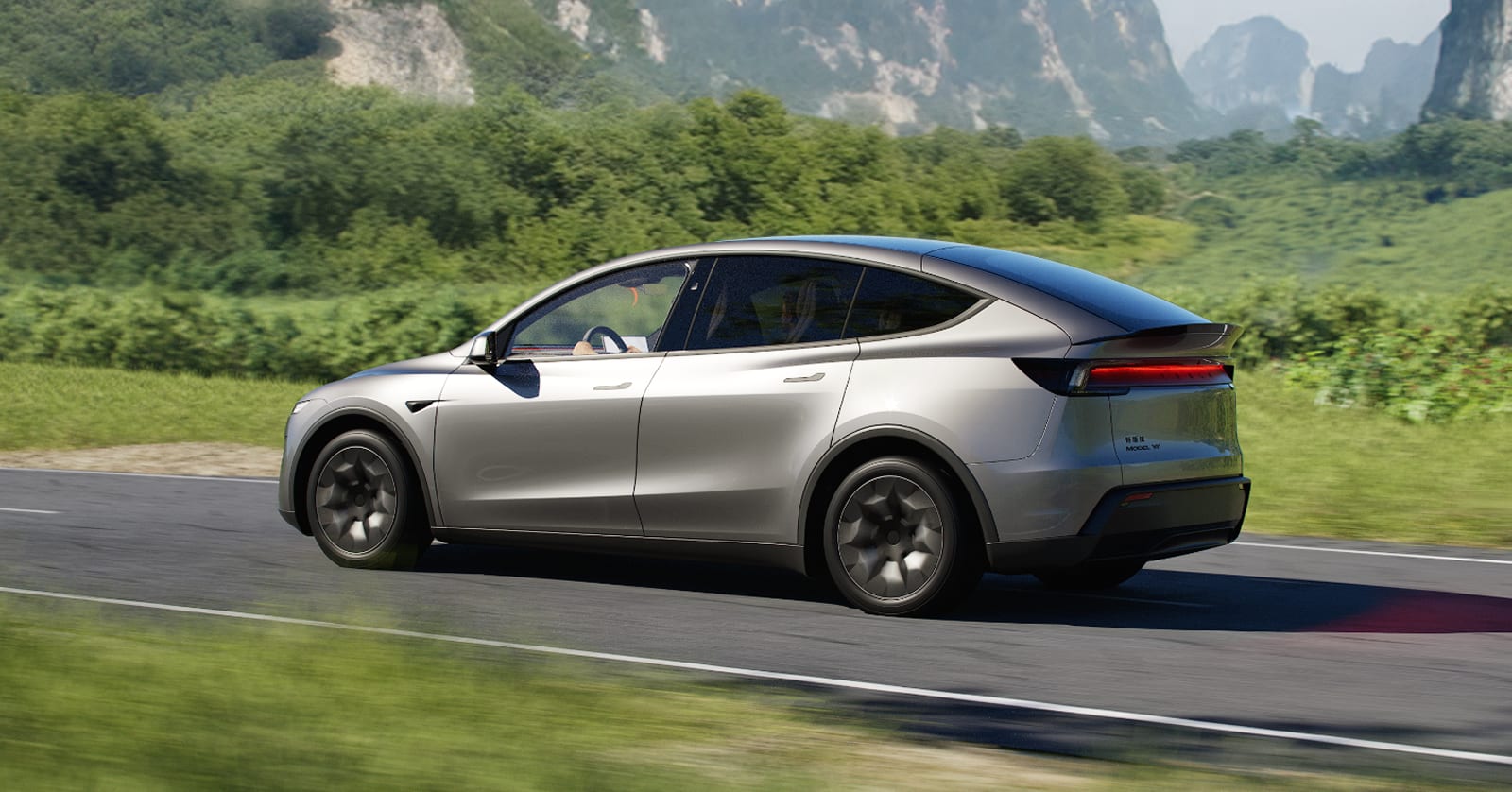
For buyers holding a budget above $50,000, two remaining temptations frequently cloud the purchasing process, the range-topping Model Y Performance and the optional seven-passenger seating configuration. Both options cater to very specific lifestyle requirements, and picking either without understanding their daily limitations leads to immediate buyer remorse.
The Model Y Performance costs $54,490, a $5,500 premium over the Long Range AWD. In exchange, you receive upgraded drive units generating a blistering 3.5-second zero-to-sixty sprint, lowered sport suspension, larger performance brake calipers, carbon fiber rear lip spoiler, and a dedicated Track Mode software suite.
For driving enthusiasts who want supercar acceleration off stoplights and enjoy weekend backroad driving, the Performance trim delivers astonishing acceleration that embarrasses sports sedans costing twice as much. However, as an everyday family vehicle, it imposes serious compromises.
Its EPA range drops to 279 miles, and in real-world 70 mph winter driving, that translates to barely 230 miles between charging stops. When combined with the stiff ride and costly tire replacements, the Performance trim demands clear compromises from family owners who value range and tranquility over lightning-fast acceleration.
The optional seven-passenger third-row seating package presents a similar reality check for growing families. Available as an option on select trims, this configuration adds two forward-facing folding seats behind the second row.
Because the Model Y shares its compact crossover architecture with the Model 3 sedan, its tapering rear roofline leaves minimal vertical headroom and virtually zero footwell depth behind the second row. Full-grown adults and tall teenagers cannot sit in the third row without resting their heads against the rear glass and jamming their knees into the front seatbacks.
This layout functions solely as an occasional emergency option for transporting small children to soccer practice. Furthermore, raising those two jump seats eliminates almost all usable cargo space, leaving no room for family luggage or strollers.
Your buying strategy should follow a pragmatic evaluation of your geography and passenger counts. If you live in a mild climate, possess a home garage with Level 2 charging, and primarily use your crossover for suburban commuting and local errands, purchase the base Rear-Wheel Drive Model Y for $44,990 and keep $4,000 in your savings account.
You receive the exact same handsome design, whisper-quiet cabin, and plush seating as top-tier buyers. If you endure snowy winters, routinely venture on multi-state family road trips, or prioritize audiophile sound quality, the Long Range AWD at $48,990 stands as the undisputed sweet spot of the entire lineup.
Only step up to the $54,490 Performance trim if blistering acceleration is your primary passion, and leave the cramped third-row option unchecked unless small children regularly fill your passenger roster.
Sources
- Tesla Official Model Y Specifications
- EPA Fuel Economy and EV Range Database
- Car and Driver Tesla Model Y Instrumented Testing