
Summary
For electric vehicle owners, installing a dedicated residential Level 2 charging station transforms the ownership experience.
For electric vehicle owners, installing a dedicated residential Level 2 charging station transforms the ownership experience. Instead of relying on slow 120-volt Level 1 trickle charging (adding just 3 to 5 miles of range per hour) or paying commercial fast-charging rates with peak-hour premiums, a 240-volt home station replenishes an empty battery overnight during low-cost utility off-peak windows.
However, planning a residential installation involves navigating electrical codes, municipal permitting, and home infrastructure limits. Homeowners often struggle to balance amperage selection against main panel capacity, risk code violations by using incorrect wire insulation ratings, or face delays from condo boards and Homeowners Associations (HOAs). This guide breaks down the electrical engineering rules, conductor specifications, and permitting steps required for a safe, code-compliant home charging installation.
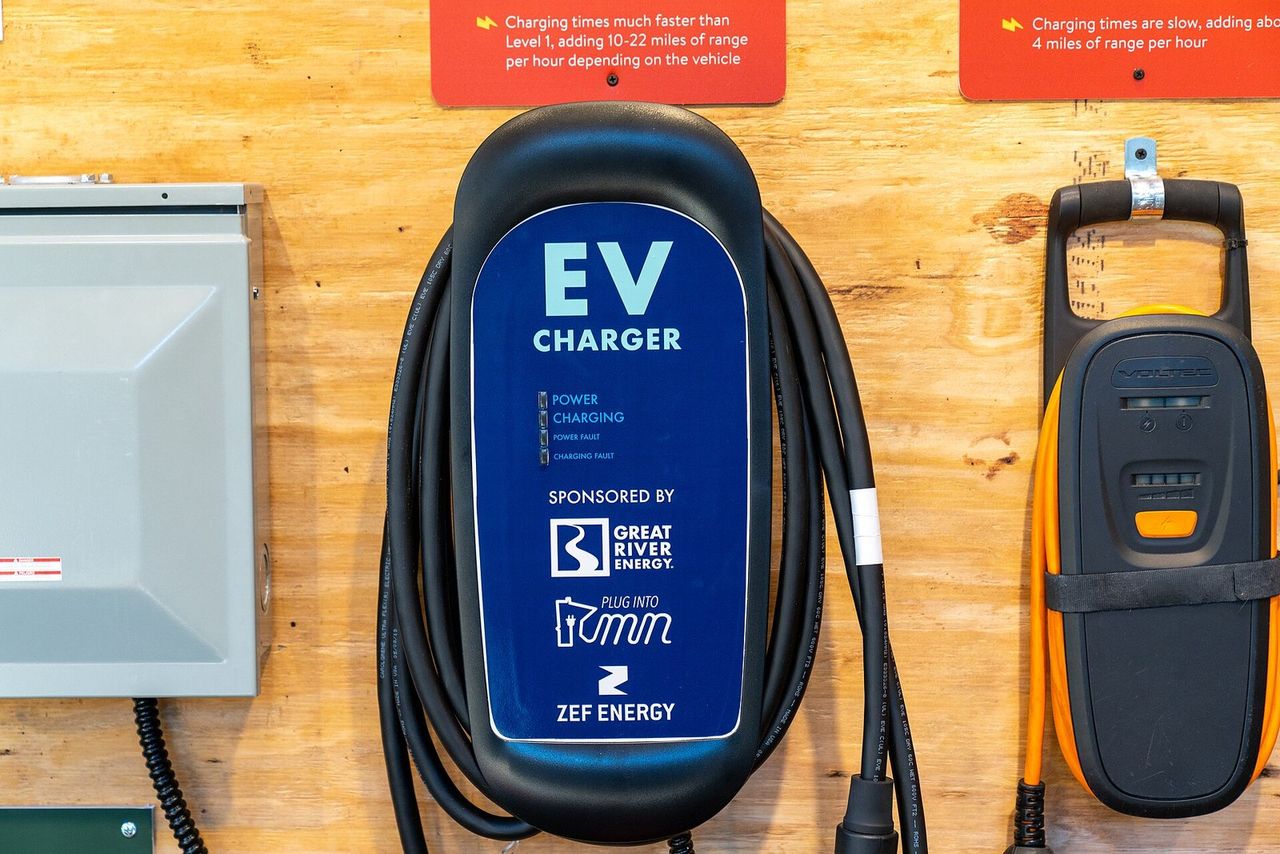
1. Sizing Your Home Charging Speed: Amperage, Kilowatts, and the NEC 80% Rule
Selecting charging equipment begins with understanding electrical load ratings under the National Electrical Code (NEC Article 625).
The 80% Continuous Load Mandate
Electric vehicle charging is classified legally as a continuous load, defined as an electrical draw running uninterrupted for three hours or more. Under NEC rules, a branch circuit carrying a continuous load cannot exceed 80% of the circuit breaker's maximum rated capacity (or conversely, the breaker must be sized to at least 125% of the charger's continuous draw).
- 48-Amp Charging (11.5 kW): Requires a dedicated 60-amp double-pole breaker. Must be permanently hardwired. Adds roughly 35 to 45 miles of range per hour.
- 40-Amp Charging (9.6 kW): Requires a dedicated 50-amp double-pole breaker. This is the maximum amperage permitted when using a standard NEMA 14-50 plug-in receptacle. Adds roughly 30 miles of range per hour.
- 32-Amp Charging (7.7 kW): Requires a dedicated 40-amp double-pole breaker. Compatible with smaller electrical services and standard plug-in units. Adds roughly 22 to 25 miles of range per hour.
Hardwired vs. NEMA 14-50 Plug-in Receptacles
While plug-in chargers offer portability, permanent hardwiring has become the gold standard for residential EV installations:
- Higher Power Delivery: Hardwiring permits full 48-amp charging on a 60-amp breaker, whereas receptacles are legally capped at 40 amps on a 50-amp circuit.
- Eliminating GFCI Breaker Nuisance Tripping: NEC 2020/2023 requires all garage and outdoor 240V receptacles to be protected by a Ground-Fault Circuit-Interrupter (GFCI) breaker. Because EV chargers contain their own internal sensitive GFCI monitoring circuitry, pairing an internal GFCI with a panel-level GFCI breaker often creates "nuisance tripping" where the two monitoring units conflict and shut off power mid-charge. Hardwired installations bypass the receptacle GFCI breaker requirement under most local jurisdictions.
- Thermal Resilience: Eliminating plug contacts removes a common point of electrical resistance and potential thermal failure.
| Charging Tier | Operating Voltage & Current | Dedicated Breaker Rating | Typical Miles of Range Added / Hour | Connection Type & Conductor Requirement |
|---|---|---|---|---|
| 48A (11.5 kW) | 240V / 48A Continuous | 60A Double-Pole | 38 - 45 Miles | Hardwired only; 6 AWG THHN in conduit (or 4 AWG NM-B) |
| 40A (9.6 kW) | 240V / 40A Continuous | 50A Double-Pole | 28 - 32 Miles | Hardwired or NEMA 14-50; 6 AWG THHN / 6 AWG NM-B |
| 32A (7.7 kW) | 240V / 32A Continuous | 40A Double-Pole | 22 - 26 Miles | Hardwired or NEMA 14-50; 8 AWG THHN / 8 AWG NM-B |
| 16A (3.8 kW) | 240V / 16A Continuous | 20A Double-Pole | 11 - 14 Miles | NEMA 6-20 Receptacle; 12 AWG standard copper |
2. Assessing Your Electrical Service: 100A vs. 200A Panels and Load Calculations
Before purchasing charging equipment, verify that your home's main electrical panel can support the additional continuous electrical draw without overloading the main utility service.
Performing a Residential Load Calculation (NEC Article 220)
You cannot determine electrical capacity simply by looking for empty physical breaker slots. A 100-amp service panel may have two open slots but lack the electrical headroom required for an additional 40A or 50A continuous load when the central air conditioning, electric heat pump, water heater, and clothes dryer run concurrently.
A certified electrician performs an NEC Article 220 load calculation sheet: $$\text{Total Connected Load} = \text{General Lighting} + \text{Appliance Circuits} + \text{HVAC (Largest Draw)} + \text{EV Continuous Load} \times 1.25$$
Overcoming the 100-Amp Main Service Limit
If your home has an older 100-amp service panel and the calculation shows an overload, replacing the utility service drop and main panel with a 200-amp system routinely costs between $3,000 and $6,000. Fortunately, code-compliant alternatives avoid this expense:
- Energy Management Systems (EMS) / Dynamic Load Shedding: Devices such as the Wallbox Power Meter, Emporia Vue, or DCC-9 automatically monitor total household power consumption in real time. If household demand surges (e.g., HVAC and oven running simultaneously), the EMS automatically throttles or temporarily pauses EV charging, resuming full power once household demand recedes.
- De-Rating the Charger: Many Level 2 chargers feature internal DIP switches or software locks allowing you to configure the unit for a 24-amp or 16-amp continuous draw on a smaller 30A or 20A breaker, which fits comfortably within a 100-amp main panel while still delivering 15 to 20 miles of range per hour.
3. Wiring, Conduit, and Hardware Selection Standards
Electrical fires associated with EV charging rarely originate inside the charger itself. Instead, failures stem from undersized wires, improper temperature ratings, or cheap builder-grade receptacles.
Conductor Temperature Ratings: THHN vs. Romex (NM-B)
Conductor sizing must conform to the temperature terminal ratings specified in NEC Table 310.16:
- Romex (NM-B Cable): Romex is restricted to the 60°C ampacity column. Under this column, standard 6 AWG copper NM-B cable is rated for only 55 amps. Therefore, using 6 AWG Romex on a 60-amp circuit breaker for a 48-amp charger violates electrical code. To run Romex for a 48-amp charger, you must step up to 4 AWG NM-B copper.
- Individual THHN / THWN-2 Conductors: When pulled through conduit (metal EMT or PVC), THHN copper is rated under the 75°C or 90°C column. Under the 75°C rating, 6 AWG THHN copper is rated for 65 amps, making it fully compliant for a 60-amp breaker powering a 48-amp hardwired charger.
Beware of Cheap Builder-Grade NEMA 14-50 Receptacles
If you opt for a plug-in installation, avoid standard $10 to $15 builder-grade receptacles designed for occasional electric range connections (e.g., baseline Leviton receptacles). An electric stove cycles on and off, whereas an EV charger draws 40 continuous amps for six straight hours. Builder-grade contacts expand and loosen under prolonged thermal stress, causing arcing, melted faceplates, and fire hazards.
Always specify an industrial-grade receptacle featuring heavy brass contact jaws, steel clamping plates, and high-torque terminal screws, such as the Hubbell HBL9450A or Bryant 9450FR (typically retailing between $60 and $90).
4. Permitting, HOA Navigation, and Safe Commissioning Checklist
Completing the project safely requires following municipal protocols and verifying mechanical connections.
Municipal Permits and Insurance Protections
Never skip obtaining a municipal electrical permit. An unpermitted installation performed by an unlicensed contractor gives your homeowner insurance carrier legal grounds to deny property damage claims in the event of an electrical fire. A licensed electrician will submit the single-line diagram, pull the building permit, and coordinate the final inspection with the city or county building inspector.
Navigating Condo Boards and HOA "Right to Charge" Laws
Condo owners and suburban homeowners often encounter HOA pushback regarding common-element wiring or exterior aesthetics.
- Over a dozen states, including California (Civil Code § 4745), Florida, Colorado, New York, Maryland, and Washington, have enacted statutory Right to Charge legislation. These laws void any HOA covenant or condominium rule that unreasonably bans or prohibits the installation of EV charging stations on deeded or assigned parking spots.
- The applicant remains responsible for installation costs, licensed contracting, and proof of electrical liability insurance, but the association cannot arbitrarily withhold approval.
Commissioning Verification Checklist
Before signing off on the installation and energizing the circuit:
- Calibrated Torque Screwdriver Verification: Verify that the electrician used a calibrated torque screwdriver or wrench to tighten all breaker lugs, neutral bars, and charger terminals to the manufacturer's exact inch-pound (in-lb) specifications. Loose terminal lugs are the leading cause of terminal oxidation and localized overheating.
- Grounding Resistance & Polarity Test: Confirm ground continuity and verify that the line-to-line voltage reads between 238V and 242V, with line-to-ground reading 120V.
- Off-Peak Scheduling Setup: Enroll in your electric utility's Time-of-Use (TOU) or EV-specific charging rate. Configure your vehicle's dashboard or the charging station's mobile application to initiate charging automatically at off-peak hours (e.g., 11:00 PM to 6:00 AM) to minimize ongoing operating costs.
来源
- 中文稿功率和报装流程按国内家用交流桩的常见口径写,没有附国家电网或南网的单页链接。
- 英文稿的 80% 持续负载来自 NEC 625 的常见转述,本篇没有附 NFPA 原文页。