Summary
Gasgoo Munich- For years, the race in NOA (Navigate on Autopilot) has boiled down to one thing: who could claim the most advanced definition. L2.5, L2.9, city-count tallies, "near-autonomous driving." These were claims that didn't need verification—only belie…
- Home
- /News
- /Mandatory NOA Standards Loom—What's Left to Compete On?
Gasgoo Munich- For years, the race in NOA (Navigate on Autopilot) has boiled down to one thing: who could claim the most advanced definition.
L2.5, L2.9, city-count tallies, "near-autonomous driving." These were claims that didn't need verification—only belief.
That road is now closed. The mandatory national standard GB 47955—2026, "Safety Requirements for Combined Driving Assistance Systems of Intelligent Connected Vehicles," has been approved. It takes effect on January 1, 2027, for all new models applying for type approval.
With compliance shifting from a bonus to an entry ticket, the question simplifies: once everyone holds the same pass, where is there left to compete in NOA?
The Era of Marketing Hype Ends With a Single Standard
Why did regulators have to step in now?
At the 2026 World Intelligent Connected Vehicle Conference in October, Guo Shougang, director of the Ministry of Industry and Information Technology's Department of Equipment Industry, revealed that as of August, about 61 million passenger vehicles in China were equipped with combined driving assistance (L2) functions. Of those, roughly 15 million featured Navigate on Autopilot (NOA).
Back in July, he noted that since 2026, the penetration rate of L2 systems in new passenger vehicles had hit 70.5%, while NOA penetration reached 34.2%.
That means when seven out of ten new cars carry this tech, "over-marketing by a few companies" is no longer an isolated issue—it's a road safety hazard.
Consider the weight of this document. It is China's first mandatory national standard for L2 combined driving assistance.
It is not an industry initiative or a group standard—it is a condition for market access.
One detail in the MIIT's interpretation stands out: compared to UN Regulation No. 171, China's standard imposes stricter requirements on operational design domain, functionality, driver status monitoring, and user notification. It also adds specific test track scenarios.
This isn't just alignment with global norms; it's an extra layer atop the international baseline.
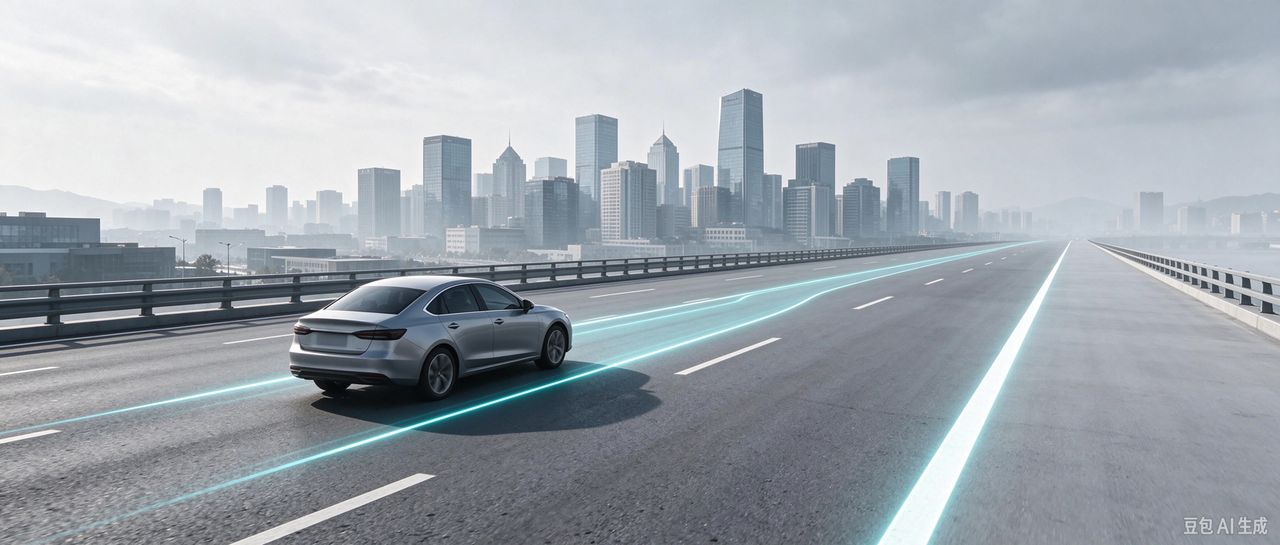
For years, NOA marketing campaigns revolved around three pillars: vague level classifications, city-count tallies, and the suggestion of being "close to autonomous driving."
The new standard plugs these gaps one by one. Systems are now classified strictly into three tiers—basic single-lane, basic multi-lane, and navigational assistance—stripping away the marketing fluff.
NOA allows automated lane changes and ramp entry, but it bans changes over solid lines and requires disengagement before intersections. Physical controls are making a comeback, driver monitoring is tiered, and systems lock out for at least 30 minutes after repeated violations.
DSSAD data logging is now mandatory, and the principle that "the driver always bears responsibility" is codified.
The MIIT defines this standard as the "baseline requirement for the safe operation of combined driving assistance systems," setting specific rules for each product category. Yet above that baseline, there is still room for generational gaps in traffic efficiency, comfort, human-like behavior, and coverage of complex scenarios.
Clearly, the mandatory standard ends the war of claims, not the war of experience.
Compliance no longer creates differentiation, but without it, you can't play. The flip side? Everyone is now forced to compete in the layer above compliance.
And in that layer, the standard has no reach. Information and slogans lose their power here, leaving only two currencies: what you dare to promise, and what you dare to invest.
Competing on Liability: From "Daring to Use" to "Willing to Pay"
An entry ticket solves the problem of selling, but not the problem of buying.
Zhang Xiaoyu, executive vice president of Changan Automobile, offered a stark set of figures at the TEDA Forum: the penetration rate of city NOA has reached 20.9%, yet actual usage sits below 6.3%.
A survey by Soochow Securities offers another perspective. Only 31% of owners frequently use city NOA, while 20% explicitly say they are afraid to use it. Over 70% rarely use it or have never activated it.
Penetration measures presence in the car; usage measures trust in the driver. The former is achieved with a spec sheet; the latter is earned only through error-free experience, time and again.
In May 2026, BYD announced an unprecedented move for a mainstream automaker: it provided a one-year safety guarantee for the city navigation functions of its "God's Eye" A and B systems.
Back in February 2025, BYD had used its "Smart Driving for All" campaign to make God's Eye standard across all models priced above 100,000 yuan and included it in most models below that threshold.
More than a year later, offering a safety net for those specific city navigation scenarios shifted the weight of "standard equipment." It moved the conversation from "the car has this feature" to "if something happens while using this feature, the automaker covers it."
BYD Chairman Wang Chuanfu put it this way: "Taking on the responsibilities of the L3 and L4 stages while still at the L2 stage."
This is the first genuine battleground left after the mandatory standard: liability.
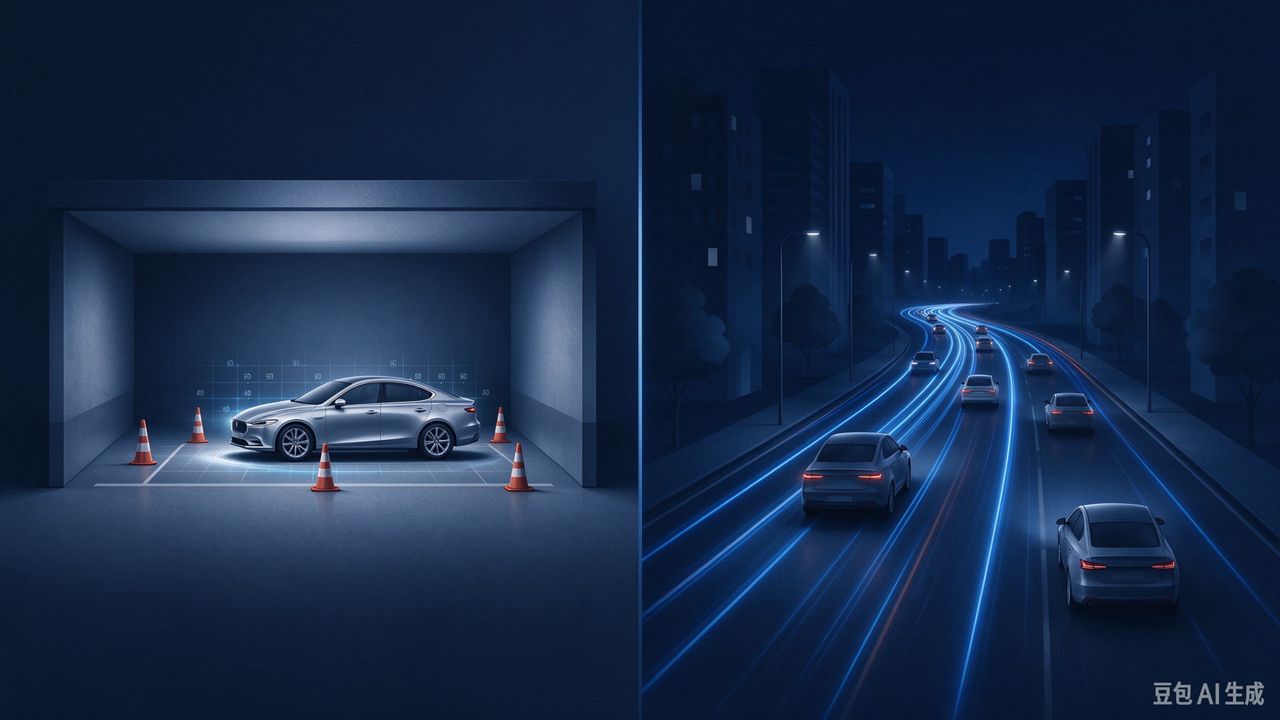
When marketing claims are constrained by standards, the winner in the "dare to use" dimension will be whoever puts their balance sheet behind their real-world performance. It's not about specs; it's about promises.
But a promise's value can't end at the press conference. It must survive two hard questions.
First, does it actually change behavior?
BYD has already provided an answer. Last July, after launching a safety guarantee for smart parking, usage rates jumped from 21% to 93%, with accident rates near zero. While parking isn't city navigation, the mechanism is identical: a safety net isn't an insurance product; it removes the cost of trial and error for the user. Insurance sells risk to the user; a safety net buys it back.
Second, when won't it pay?
"Compliant use" is the keyword here. Hands off the wheel, eyes off the road, operating outside the operational design domain (ODD), ignoring takeover requests, or any non-compliant use could all fall under exemptions. The real boundary of a safety net isn't the phrase "full compensation"—it's the length of the fine print.
There is a more technical distinction as well. A safety net does not alter the legal liability of L2; the driver remains the responsible party, and the automaker is merely performing civil compensation on their behalf.
The driver's accident liability, insurance record, and potential recourse remain unaffected by "full compensation." However, "driver liability" does not mean "system immunity": the guarantee buys out the user's civil compensation burden, but it does not erase the automaker's own product liability risks.
So, the dividing line in this liability war is clear. Shouting about full payouts while hiding exemptions is marketing. Publicly defining the boundaries and still paying out when due? That is capability.
Yet, daring to use is only the first hurdle. The second is willingness to pay.
At this year's World Intelligent Connected Vehicle Conference in October, NIO founder William Li offered another perspective. He narrowed the metrics for the second half of the autonomous driving race to two verifiable indicators—one of which he defined directly as "willingness to pay."
"If users aren't willing to pay," Li said, "then no matter how well you talk about autonomous driving, you haven't truly created user value."
The industry, however, is squeezing that willingness to pay out of existence.
On one side, there is price equalization. The top trim of the Leapmotor A10, at 86,800 yuan, comes with lidar and city navigation.
Horizon Robotics used a single Journey 6M chip to smash the city NOA cost barrier down to the 100,000-yuan level, while Huawei's Qiankun dipped into the 100,000 to 150,000 yuan range. Hardware costs have been crushed to between 4,500 and 5,000 yuan—a 43% drop in two years.
On the other side, there is standardization. NOA has shifted from an optional extra on high-end trims to a free, standard feature across entire lineups. BYD's "Smart Driving for All" move in February 2025 was the turning point.
The awkward reality is this: NOA was commoditized before it ever really matured.
When a feature is given away for free, why would a user pay for it separately?
That is the real commercial challenge on the demand side.
Only three paths remain: sell liability—guarantees, safety nets, and clearly defined payout boundaries; sell ongoing service—subscriptions, OTA upgrades, and capability-based unlocking; or sell segmentation—tiering city NOA, door-to-door driving, and L3 capabilities into different price points.
All three paths share one thing in common. They don't live on the spec sheet; they live on renewals and repeat business.
Competing on Roadmap and Scale: The Split Is in the Timeline, Not the Ticket
Once the rules are unified, the paths forward actually diverge.
XPENG founder He Xiaopeng advocates skipping L3 entirely. He argues that L3 merely shifts responsibility to the system without improving safety or optimizing the experience. The true destination, he insists, is L4, with a window opening in the second half of 2028.
Yang Dongsheng, senior vice president of BYD and president of the Automotive New Technology Research Institute, sees it differently. L3 safety requirements are "hundreds of times" higher than L2, he argues. Covering long-tail scenarios like blowouts, slick roads, and system failures requires comprehensive upgrades to motors, steering, braking, chassis, and electronic architecture. The mass production window for limited-scenario L3, he agrees, is also in 2028.
Two roadmaps point to the same year, yet they give opposite answers on whether the interim step is worth taking.
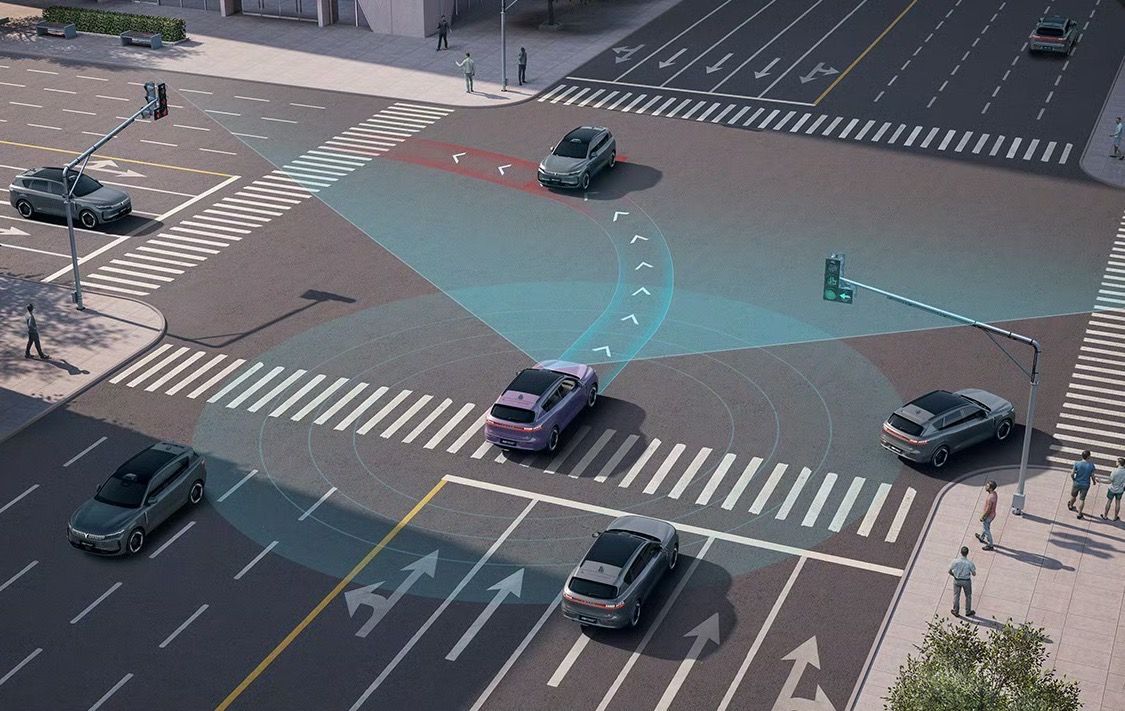
Image Source: VOYAH
The substance of this disagreement is not technology.
L3 sells the transfer of liability within limited scenarios—something you can price right now. L4 sells freedom from human intervention, which must wait until after 2028. One is choosing to cash in early; the other is choosing to wait.
More telling than the verbal debate are the product moves automakers are making within the same time window.
On November 13, the AISTALAND GT7 Ultra Comfort Edition launched, with both trims featuring standard "L3-ready full-link redundant architecture" and priced above 200,000 yuan. That same day, the launch of the AITO M8 also included references to L3-oriented architecture.
The common thread: no one is waiting for the L3 mandatory standard to land before acting, yet no one is pushing L3 architecture down into the 100,000-yuan segment.
The math isn't complicated. Industry estimates put the hardware cost increase for L3 over mainstream L2 at 15,000 to 30,000 yuan per vehicle. An 80,000-yuan car can't absorb that premium, so L3 architecture will likely debut first above 200,000 yuan. Mass-market NOA will remain stuck at L2.
The so-called divergence in roadmaps is, in product terms, a division of price bands.
And the mandatory national standard for L3/L4 won't be implemented until July 2027. That means the next year or so will be an "L3 era without L3": automakers are selling L3-ready hardware architecture and redundancy preparations, not yet-compliant L3 capabilities.
To distinguish real preparation from rhetoric, look for three things: isomorphic dual redundancy in the execution layer (dual power, dual steering, dual braking, dual domain control—are they truly independent and switchable?); public results from minimal risk maneuver tests; and a timeline for L3 regulatory approval. If a company lacks all three but still marks "L3-oriented" on a slide deck, it's just a pricing tool.
Yet, for all the disagreement, both paths share the same engineering prerequisite: whether you choose L3 or L4, the stable delivery of end-to-end models is not optional. Algorithms must be deployed across hundreds of thousands, even millions, of vehicles—and engineering capability is the gatekeeper.
So, the roadmap battle is about "when you dare to accept liability," and the scale battle is about "how fast you can get data."
The disagreement changes the timeline and the narrative, but it does not change the conditions for entry.
Whether you choose L3 or L4, everyone eventually must pass through the same narrow gate. Do users dare to use it? Are they willing to pay for it?
Conclusion: Where's the Next Battleground?
The answer may lie in three things: competing on liability—daring to write detailed exemption clauses; competing on roadmaps—whether an architecture can pass a public minimal risk maneuver test; and competing on scale—whether the data loop can maintain a lead under compliance constraints.
These three things share a common trait: they are not found on spec sheets or compliance certificates.
The mandatory standard has defined the boundaries of the track, but it hasn't shortened the distance to the finish line. China's autonomous driving sector is at a critical juncture, moving from road testing to mass commercialization. The coming competition isn't about who runs fastest within the boundaries, but who can get the most people to hop on board while staying inside them.
The 80,000-yuan car is already here. The question now is: how many people are willing to pay for it again?
Companies in this article
Gasgoo not only offers timely news and profound insight about China auto industry, but also help with business connection and expansion for suppliers and purchasers via multiple channels and methods. Buyer service: buyer-support@gasgoo.com Seller Service: seller-support@gasgoo.com
All Rights Reserved. Do not reproduce, copy and use the editorial content without permission. Contact us: autonews@gasgoo.com
Related Documents(3)

Related Articles
Weekly E-News | AITO Realigns Two Core Roles; Volkswagen China NEV Sales Hit Record High
Jensen Huang Resigns: NVIDIA Stable in China for Now, but What About the Long Term?
ARCFOX Launches Battery-Swap Ecosystem; Two Models Start at 52,000 Yuan With Battery Rental