
Summary
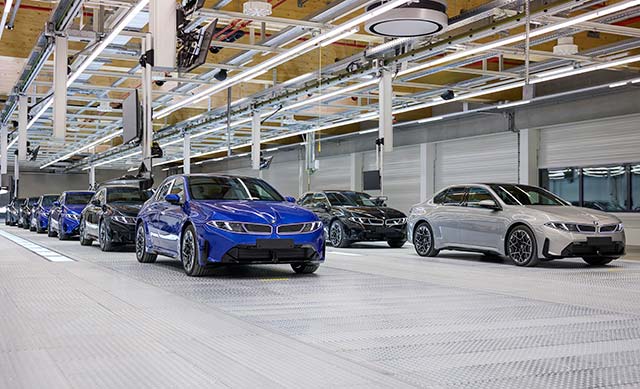
BMW has officially started series production of the new BMW i3 at BMW Group Plant Munich, marking a major milestone in the company’s transition toward its next-generation Neue Klasse electric vehicle platform. The fully electric i3 entered production followin…
BMW has officially started series production of the new BMW i3 at BMW Group Plant Munich, marking a major milestone in the company’s transition toward its next-generation Neue Klasse electric vehicle platform.
The fully electric i3 entered production following four years of extensive transformation at BMW’s historic Munich facility, which has been redesigned with new manufacturing technologies, upgraded logistics systems, and dedicated EV production capabilities.
BMW says demand for the new i3 has been strong since orders opened in mid-June, creating a rapid production ramp-up as the automaker prepares for the launch of one of its most important electric models.
BMW i3 Leads New Neue Klasse Production Era
The new BMW i3 represents the second production model based on BMW’s Neue Klasse architecture, following the introduction of the next-generation EV family designed to improve efficiency, range, performance, and manufacturing flexibility.
“The models of the Neue Klasse are proving to be very popular,” said Jochen Goller, BMW AG Board Member responsible for Customer, Brands and Sales. “The second Neue Klasse model, the BMW i3, is already seeing strong demand since orders opened ahead of its launch.”
For BMW, the i3 name carries significant importance. The original BMW i3, launched in 2013, helped establish the company’s early electric vehicle strategy. The new model takes the name into a new era, combining the brand’s iconic 3 Series heritage with a fully electric future.
BMW Munich Plant Becomes Fully Electric Production Hub
BMW Group Plant Munich has undergone one of the largest transformations in its history while continuing vehicle production throughout the process.
The facility now features a completely new body shop, a modern assembly hall, expanded logistics areas, and advanced digital manufacturing systems. Around one-third of the plant has been rebuilt to support Neue Klasse vehicles.
BMW attributes these improvements to optimized production processes, increased automation, digitalization, and the efficiency advantages of the Neue Klasse vehicle architecture.
Beginning in 2027, Plant Munich will exclusively produce fully electric vehicles, securing its role as a key EV manufacturing location for BMW’s global production network.
BMW Targets More Efficient EV Manufacturing
The production of the BMW i3 is part of BMW’s broader iFACTORY strategy, which focuses on efficient, sustainable, and digitally connected vehicle manufacturing.
The approach combines automation, artificial intelligence, digital twins, and advanced quality control systems to improve production efficiency while maintaining BMW’s manufacturing standards.
The Munich plant’s transformation demonstrates BMW’s effort to modernize existing facilities instead of relying only on new EV factories. The company says the knowledge gained from launching Neue Klasse production in Munich will benefit its manufacturing network worldwide.
New Battery and Electric Motor Supply Chain Supports BMW i3
Production of the BMW i3 is supported by BMW’s expanded regional EV supply chain in Europe.
The company’s new BMW Group Plant Irlbach-Straßkirchen in Lower Bavaria will supply sixth-generation high-voltage batteries for Neue Klasse models, including the i3. The battery facility uses advanced manufacturing technologies, digital twins, artificial intelligence, and continuous quality monitoring.
The BMW i3’s Gen6 electric motor will be produced at BMW Group Plant Steyr in Austria. The facility will manufacture key components of the highly integrated electric drive system, including the rotor, stator, power electronics, and transmission.
BMW’s Landshut plant will supply aluminum motor housings for the electric drive production process.
BMW i3 Marks New Chapter for Electric Mobility
The start of BMW i3 production represents a major step in BMW’s electrification strategy. With Munich transitioning into a dedicated EV manufacturing center and additional Neue Klasse models planned, BMW is preparing for a new generation of electric vehicles built around improved efficiency and advanced technology.
The new i3 will play a central role in BMW’s electric lineup, combining the brand’s traditional driving dynamics with next-generation EV architecture designed for the future of premium electric mobility.