
Summary
Renault is expanding its electric vehicle expertise into the defense sector with the unveiling of the Forefront Concept, an all-electric, all-wheel-drive robotic platform designed for military operations and hazardous civilian applications. Developed in partn…
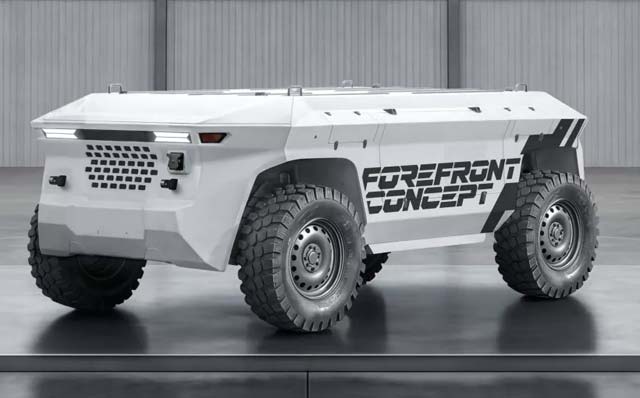
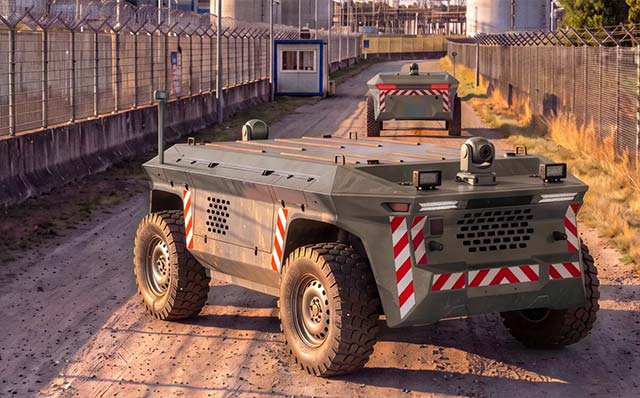
Renault is expanding its electric vehicle expertise into the defense sector with the unveiling of the Forefront Concept, an all-electric, all-wheel-drive robotic platform designed for military operations and hazardous civilian applications.
Developed in partnership with Belgian defense company John Cockerill, the unusual cab-less vehicle combines silent electric propulsion, remote operation, autonomous driving capabilities and serious off-road performance.
Unlike conventional military vehicles, the Forefront Concept has no driver’s cabin. Instead, it is designed to be operated remotely by a human or eventually navigate complex environments autonomously, potentially reducing the risks faced by military personnel in dangerous operational areas.
The project also highlights how established automotive technologies could help bring military robotics to production faster and at a lower cost.
Renault Forefront Concept Is an Electric Off-Road Machine Built for Tough Environments
The Renault Forefront Concept is a modular electric ground platform developed around a relatively simple but capable architecture. It features two electric motors, four-wheel drive and four-wheel steering, giving it the traction and manoeuvrability needed to operate across challenging terrain.
Its cab-less design is one of its most distinctive features. Without a conventional driver’s compartment, the platform can be configured for different missions and equipment, while remote operation allows personnel to control it from a safer distance.
Renault is targeting an operating range of approximately 250 miles (400 kilometers) on a full charge. An optional range extender can increase its operational distance, although the company has not disclosed the battery capacity, range-extender specifications or the additional range it could provide.
Another important advantage is its near-silent electric operation. This could prove particularly useful in military environments where reducing noise can be an important tactical consideration.
The platform is also designed to carry a payload of up to 2,200 pounds (one tonne), making it suitable for transporting equipment, supplies and specialized mission systems.
Designed for Logistics, Anti-Drone Operations and Evacuation
Although the Forefront Concept is being developed with military applications in mind, its potential uses extend well beyond conventional battlefield logistics.
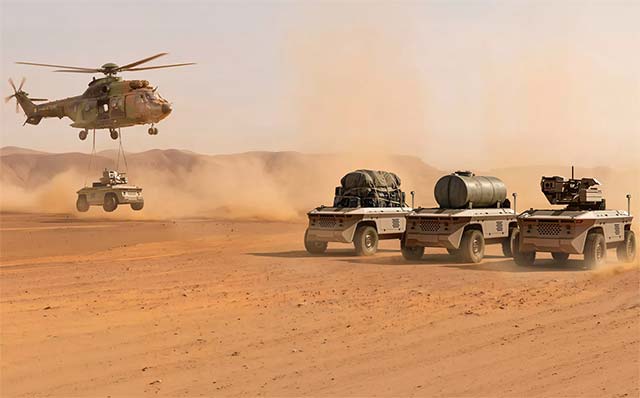
Renault and John Cockerill have identified several possible military roles, including logistics support, intelligence, surveillance and reconnaissance (ISR), anti-drone operations, fire support and evacuation missions.
The ability to send an unmanned vehicle into dangerous areas could reduce the exposure of soldiers to enemy fire, explosives and other threats. Instead of putting personnel behind the wheel, military units could remotely operate the platform from a protected location.
Its modular architecture could also allow different equipment and mission systems to be installed depending on operational requirements.
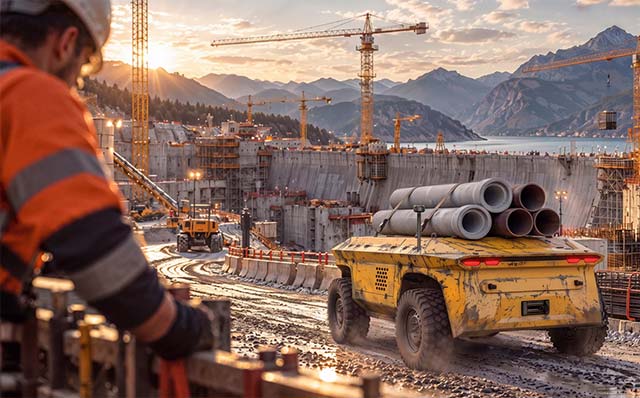
Civilian applications are another important part of the project. The same capabilities could make the Forefront Concept useful for civil protection services, emergency response teams and companies operating in hazardous or difficult-to-access environments.
For example, it could transport supplies into disaster zones, support emergency evacuations or carry equipment into industrial locations where sending workers directly would present significant safety risks.
Renault and John Cockerill Bring Different Expertise to the Project
The Forefront Concept combines two complementary areas of industrial expertise.
Renault Group is responsible for the mobile platform itself, drawing on its experience in modular vehicle architectures, electric powertrains and battery development.
Rather than developing every component from scratch, Renault has focused on reusing proven automotive technologies. This approach is intended to reduce engineering costs, shorten development timelines and make large-scale manufacturing more practical.
The automaker is also applying design-to-cost and design-to-manufacturing principles from the beginning of the project. Its established supply chain and more than 15 years of electrification experience could help turn the concept into a commercially viable platform if demand emerges.
John Cockerill, meanwhile, developed the remote-operation and autonomy systems. The company also contributes expertise in vehicle militarisation, mission-system integration and operational support.
Its modular and scalable technology is intended to allow the Forefront to progress toward fully autonomous operation while maintaining the safety and security required in complex environments.
The partnership effectively combines Renault’s ability to develop and manufacture vehicles at scale with John Cockerill’s experience in defense systems and military robotics.
French Armed Forces to Test the Renault Forefront Concept
The Forefront Concept has been developed with input from the French armed forces, which are preparing to evaluate the platform through a series of exercises and operational trials.
These tests will help determine how effectively the vehicle performs in demanding conditions and whether its capabilities match the evolving requirements of modern military operations.
Feedback from the exercises will also help Renault and John Cockerill refine the concept, particularly its mobility, remote-control systems and autonomous functions.
The trials are an important step toward determining whether the platform can move beyond the demonstration stage and become a production-ready military vehicle.
Renault Group CEO François Provost described the project as an example of how the company’s industrial and technological capabilities can contribute to strategic sectors such as unmanned ground vehicles.
John Cockerill CEO Jean-Luc Maurange highlighted the convergence of automotive manufacturing, robotics and autonomous systems, pointing to the potential of remotely operated platforms to improve operational capabilities while reducing soldiers’ exposure to danger.